
 The best navratri dress for women in 2026 balances three things: breathable fabric for hours of dancing, a silhouette suited to the occasion (Garba, Dandiya, puja, or office), and craftsmanship that holds up to rewear after the festival. Anarkalis in cotton mulmul, kurta-palazzo sets in Chanderi, and A-line suits in linen lead this year’s shift toward comfort-first festive fashion, without giving up embroidery or colour.
Navratri fashion evolves fast, balancing tradition with how women actually dress now: busier, more mobile, less willing to trade comfort for occasion-wear. This guide covers ten trending navratri outfits for women, colour trends, fabrics, and styling tips.
1. The Wine Anarkali for Garba Nights
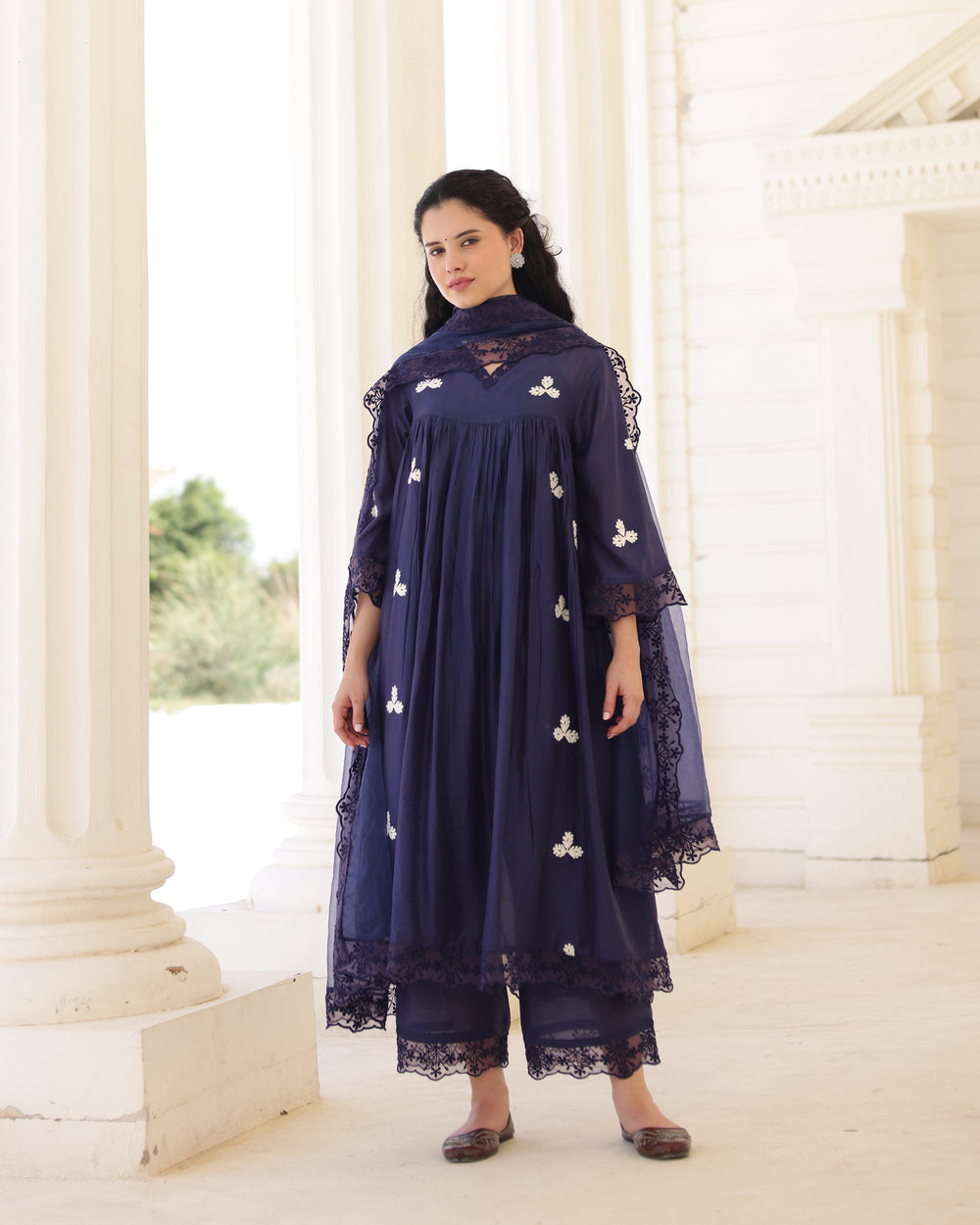
A cotton anarkali suit in a deep merlot wine is having a real moment this year, and it’s easy to see why. The flared silhouette moves beautifully through Garba circles, while cotton mulmul keeps the body cool through long hours of dancing, something silk and velvet simply can’t promise.
This particular anarkali for navratri, finished with taari embellishment along the yoke, works for both dusk pujas and late-night dandiya because the wine base reads rich under both daylight and string lights. It flatters pear and hourglass body types especially well, since the fitted bodice and flowing skirt balance the frame.
Styling tip: Pair with oxidised silver jhumkas and a stack of glass bangles. Skip gold, which tends to compete with the wine undertone. Post-Navratri, the same anarkali works for a wedding sangeet with the addition of a statement necklace.

2. Terracotta Leheriya for the Traditionalist
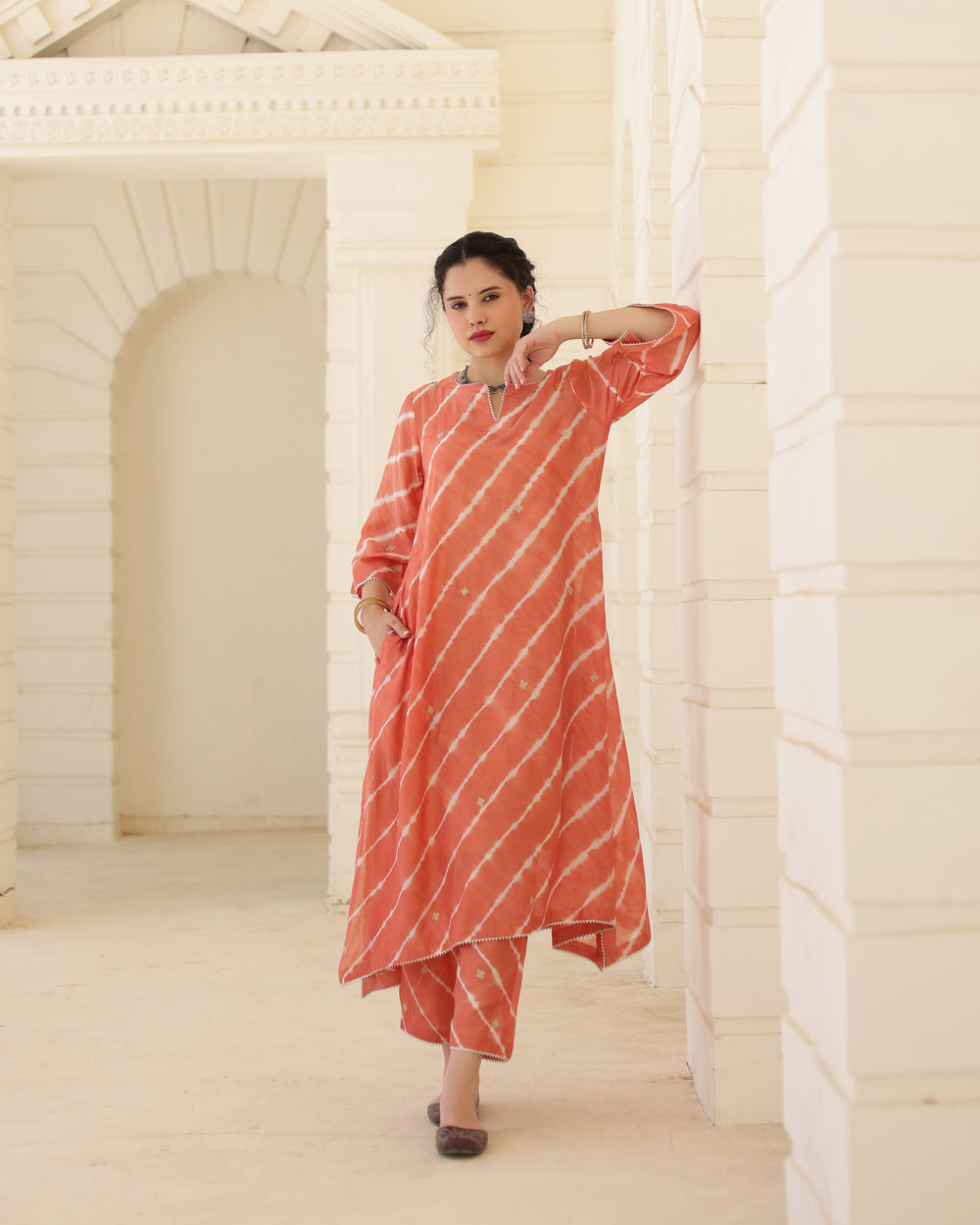
Leheriya is one of those techniques that never really trends; it’s simply always relevant, and this year’s terracotta hand-dyed version proves why. The wave-pattern dye technique on Chanderi fabric, finished with zari embroidery at the neckline, gives a traditional navratri dress feel without looking dated.
Terracotta sits beautifully against Indian skin tones and works for family puja mornings as much as it does for an evening dandiya function. It’s one of the rare shades that doesn’t need daylight to look festive. Chanderi’s natural sheen also means minimal ironing between wears, a small but real convenience during a nine-day festival.
Styling tip: Keep jewellery in oxidised gold and let the leheriya pattern be the statement. This kurta set transitions easily into Diwali or Karva Chauth wardrobes afterward.
3. Yellow Anarkali for Daytime Celebrations
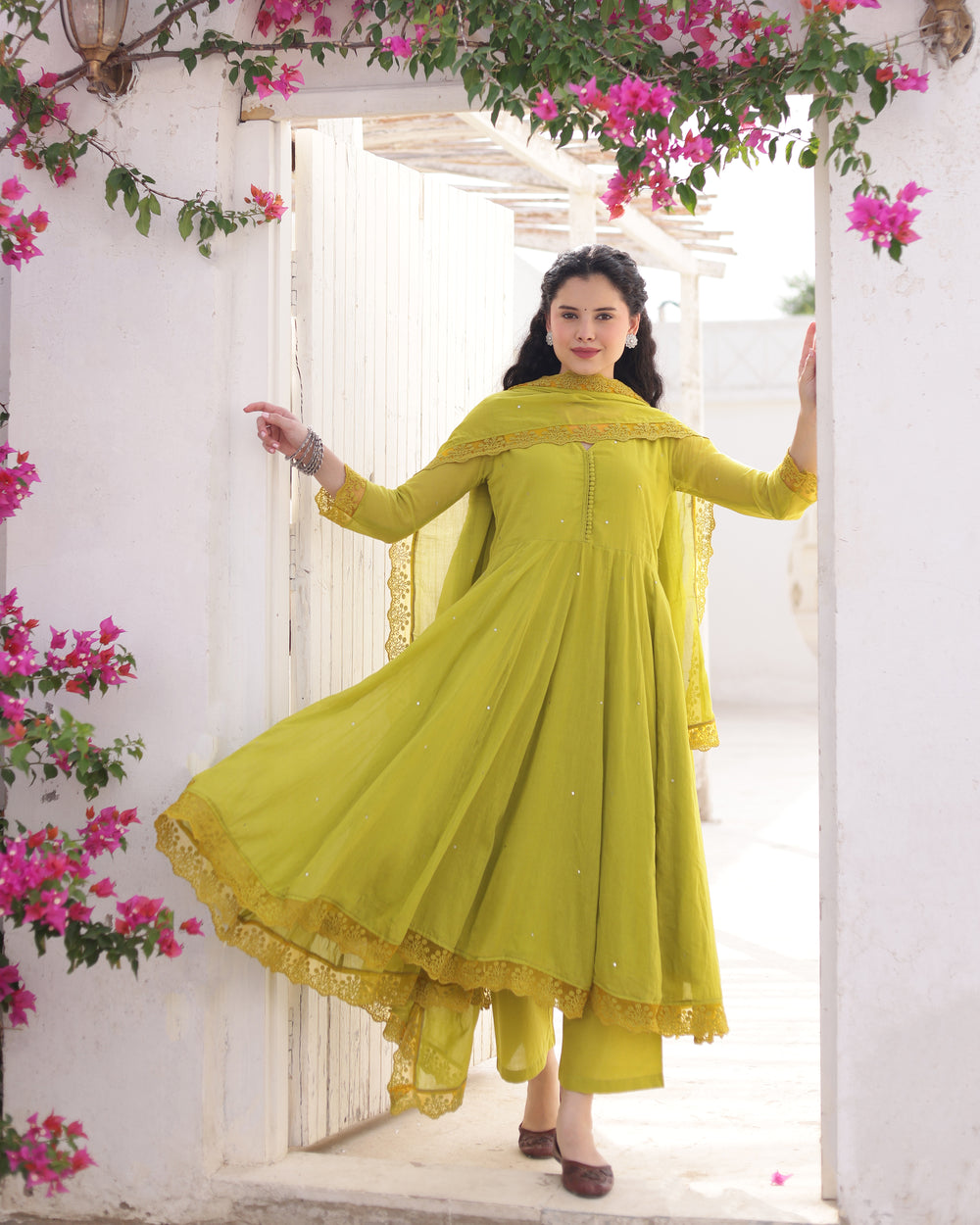
Yellow is the colour every stylist recommends for morning Navratri events, and this Abeer yellow anarkali dress with a taari-embroidered dupatta is built specifically for that slot. Cotton mulmul is soft against the skin and doesn’t cling in humid weather, making it ideal for outdoor pandal visits.
The embroidered dupatta lifts an otherwise simple silhouette, so the outfit reads festive without being heavy, a good match for women who want ease of movement for temple visits or a family puja outfit. It suits most body types since the anarkali cut skims rather than clings.
Styling tip: Go light on jewellery. Jhumkis and a single maang tikka are enough. Rewear it as festive office wear by swapping the dupatta for a plain stole.

4. Navy Kurta Palazzo Set for Modern Ease
For women who want festive dressing without the fuss of a flared skirt, a navy Chanderi kurta palazzo set with aari embroidery is the answer. Aari work has a fine, dense texture that photographs beautifully, and navy is quietly becoming one of the standout navratri fashion trends for 2026: deep, versatile, and flattering under both daylight and festive lighting.
The kurta-palazzo silhouette is genuinely one of the most comfortable options for dandiya, where constant movement rules out anything restrictive. It also suits taller and petite frames alike, since palazzos elongate the leg line.
Styling tip: Silver oxidised jewellery and block heels complete the look. This set easily becomes festive office wear later in the season.
5. Fuchsia Organza Straight Set for Evening Glamour
When the occasion calls for evening festive wear, a fuchsia zari-embroidered straight kurta set in viscose organza delivers instant impact. Organza has a natural structure and slight sheen that catches light beautifully, ideal for evening dandiya or a festive dinner where you want visible shimmer without excess weight.
Fuchsia is one of this year’s boldest navratri fashion colours, and the straight-cut silhouette suits apple and rectangle body types particularly well by adding definition at the waist.
Styling tip: Keep the dupatta draped over one shoulder and finish with statement jhumkas. Post-festival, this suit set doubles as cocktail-hour ethnic wear.

6. Golden Chanderi Straight Set for a Refined Look
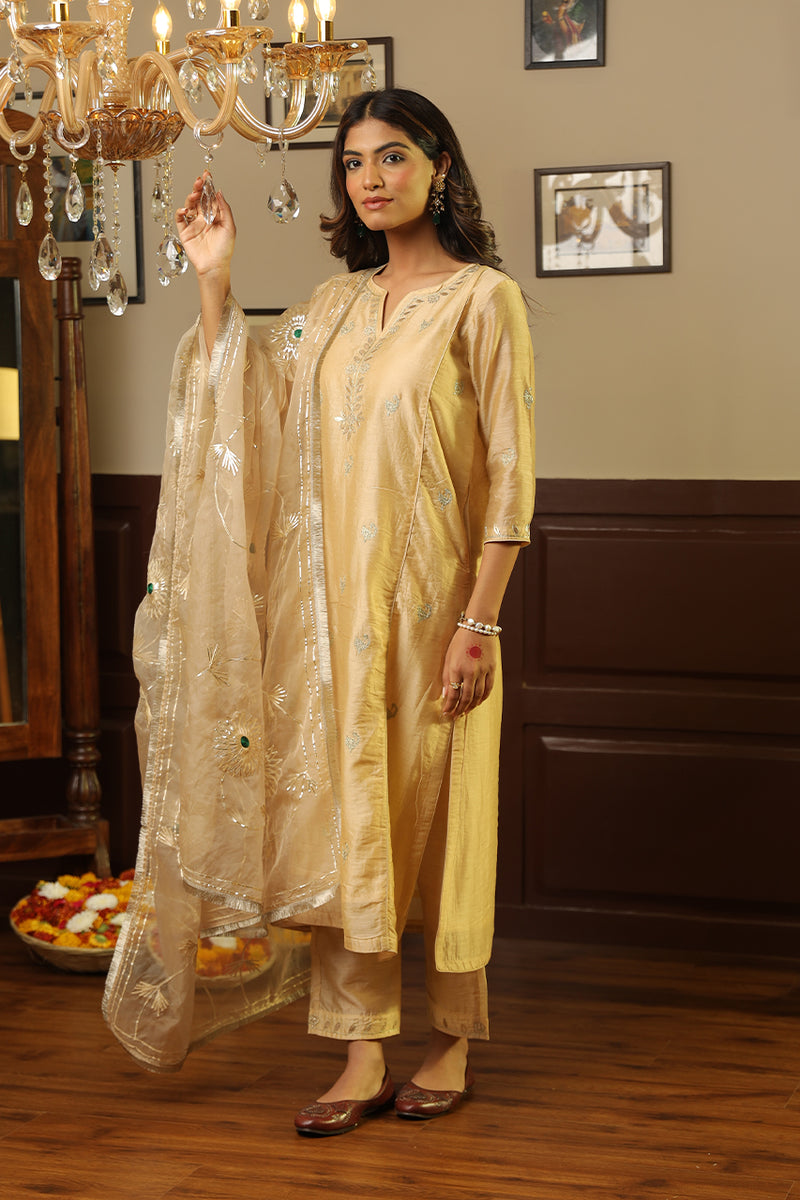
A golden Chanderi straight set with a gota jaal dupatta is the kind of festive suit set that photographs like an heirloom. Gota work is one of Rajasthan’s most recognisable embroidery techniques, and its metallic patchwork catches light without the weight of heavier zardozi.
This piece works particularly well for evening pujas and family functions where a slightly more traditional silhouette is expected. The straight-cut kurta suits most body types and is especially flattering for those who prefer a streamlined fit over a flared one.
Styling tip: A statement kundan choker anchors the look; keep earrings minimal. It reworks beautifully as bridal-function ethnic wear later in the year.
7. Purple Chanderi Straight Set with Heavy Neckwork
Purple has quietly become one of the season’s most requested shades, and this heavy-neck zari-embroidered Chanderi straight set shows why: it reads as regal without tipping into overdone. The concentrated embroidery around the neckline means the rest of the outfit can stay clean and structured.
This embroidered suit set is ideal for evening dandiya or a festive dinner where you want one strong focal point rather than embellishment throughout. It particularly flatters those with broader shoulders, since the neckline draws the eye inward.
Styling tip: Skip the necklace entirely and let the neckwork stand alone. Add only earrings and a ring. Rewear for Diwali evening events.

8. Magenta Hand Block Printed Suit for Everyday Festivity
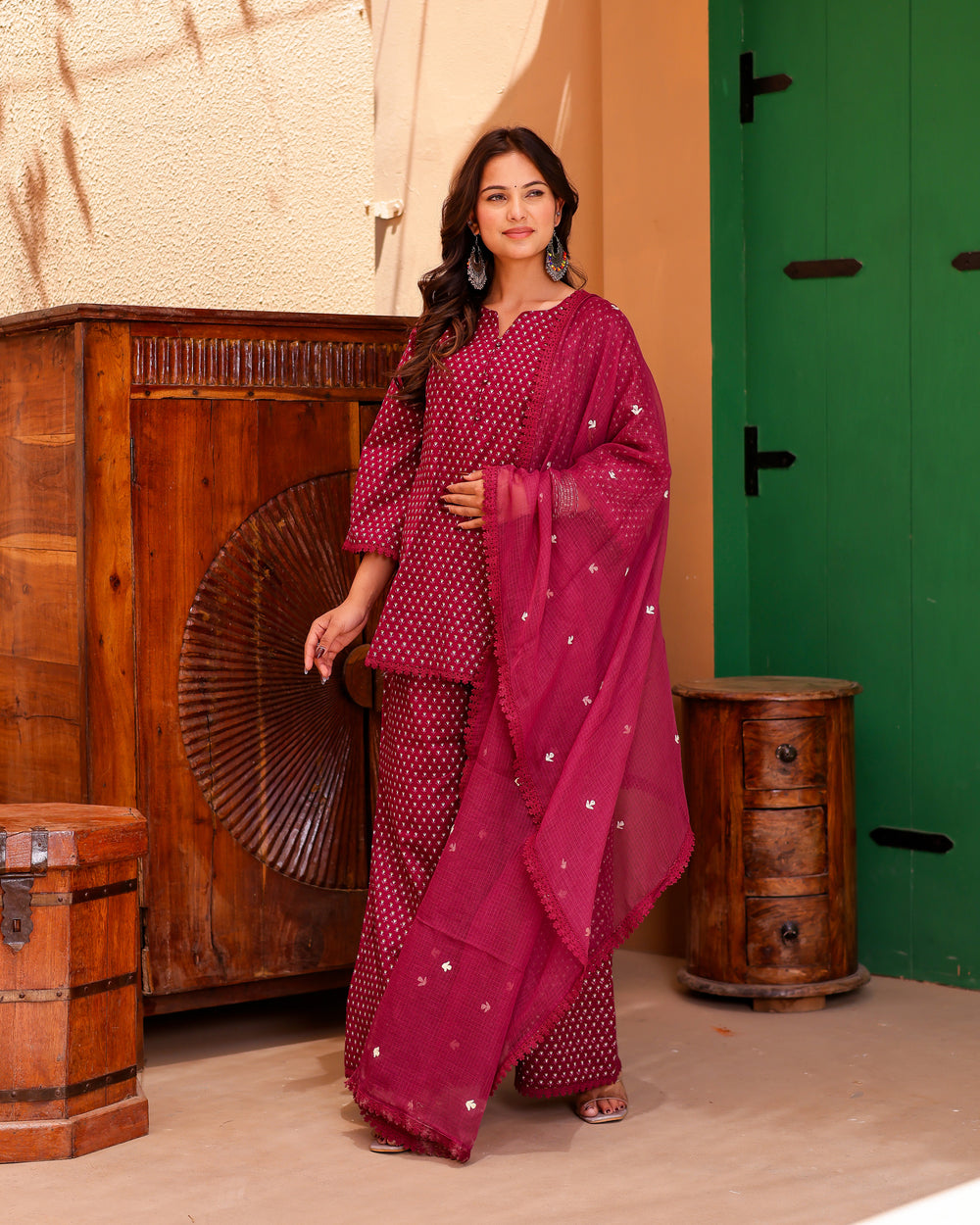
Not every Navratri occasion calls for embroidery, and that’s where a hand block printed suit in magenta earns its place. Block printing is a slower, hand-done craft, and the slight irregularity of each print is part of its appeal; no two pieces look machine-identical.
This is one of the most versatile picks on this list: light enough for a family puja outfit, structured enough for festive office wear, and comfortable enough for a full day of errands and celebration back to back. It suits nearly every body type, given its relaxed, unfitted cut.
Styling tip: Pair with terracotta jewellery for an earthy, festival-ready finish. It’s genuinely wearable well beyond Navratri as everyday ethnic wear.
9. Pista Green Linen A-Line Suit for Effortless Comfort
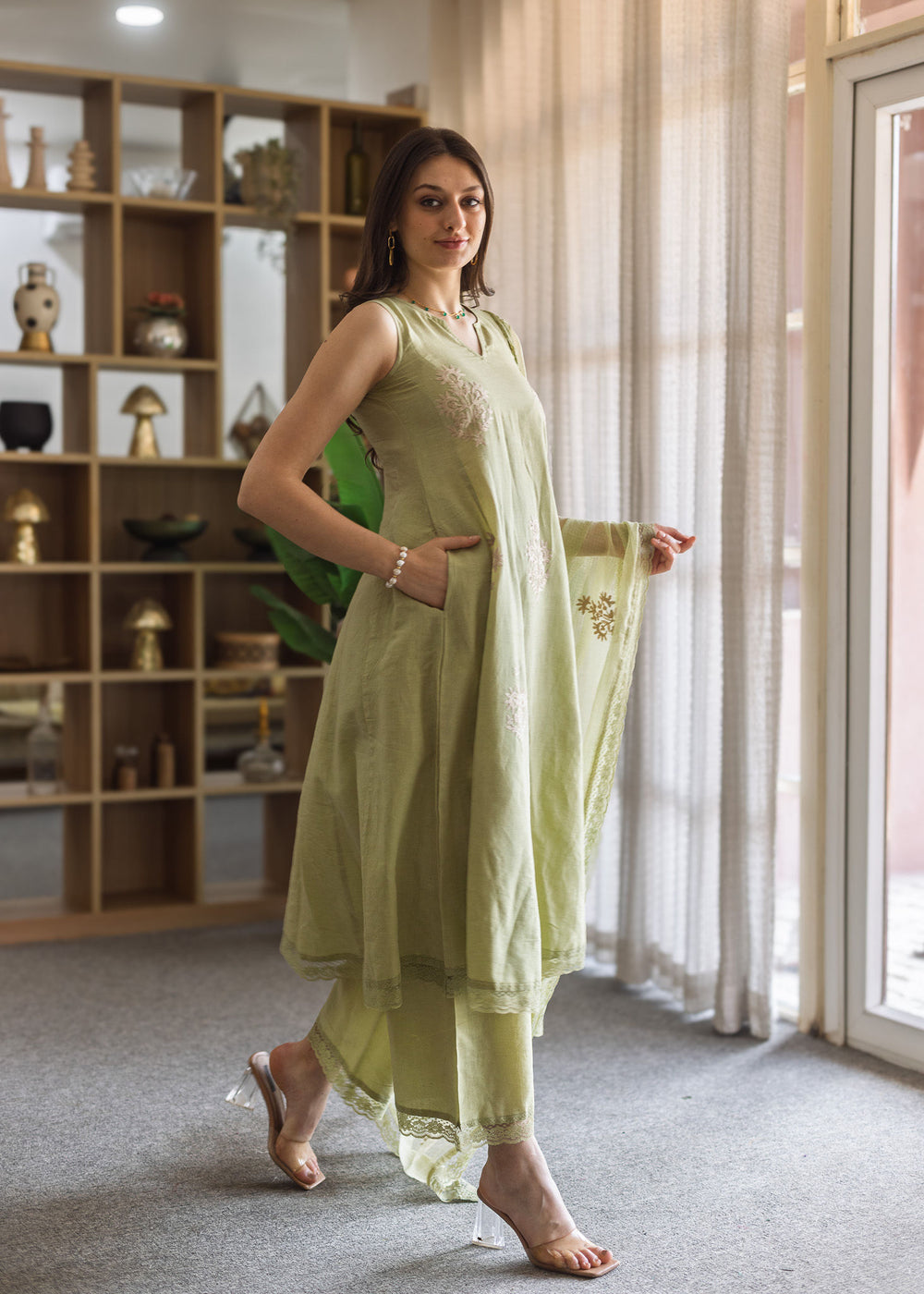
Linen is having a breakout festive season, and this pista green embroidered A- line suit set shows how well it performs outside its usual summer-casual role. Linen breathes even better than cotton in humid climates, making it one of the smartest festive cotton outfits alternatives for women attending back-to-back events.
The A-line cut is one of the most universally flattering silhouettes available, skimming the midsection while adding gentle volume below. It works equally well for a temple outfit or a relaxed Garba evening.
Styling tip: Keep footwear flat. Juttis work perfectly here, and choose jewellery in rose gold to complement the pista undertone. It transitions easily into post-festival brunch wear.
10. Teal Linen Straight Set with Mughal Embroidery
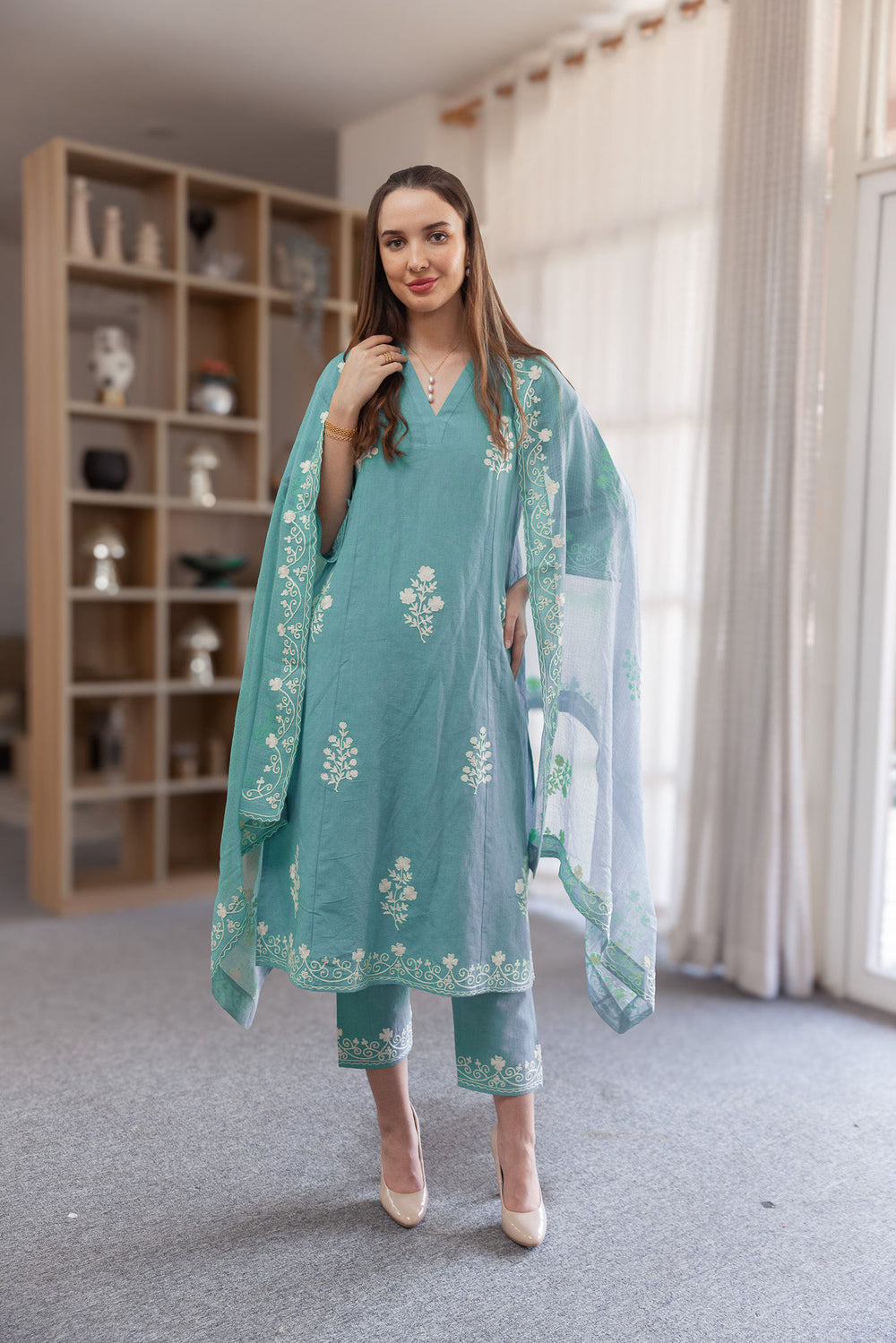
Closing the list is a teal linen straight set with Mughal-inspired embroidery, a pick that leans into intricate, storytelling craftsmanship. The embroidery draws from Mughal architectural motifs, giving the outfit a more collected, editorial feel than typical festive florals.
Teal is emerging as one of the standout women’s festive outfits colours this year because it works equally well in daylight and under evening lighting, which is rare for a jewel tone. The straight silhouette suits most frames and is particularly good for women who prefer tailored ethnic wear over flowing cuts.
Styling tip: Pair with antique gold jewellery and block heels for family functions or evening dandiya. It reworks well as a festive workwear option post-Navratri.
