A good colour choice should do three things: suit the event’s light, work with the bottom and footwear you already have, and give you a realistic chance of rewearing the kurta. This guide moves beyond generic complexion rules and focuses instead on context, contrast and styling. Almost any colour can work when the fabric, fit and accessories support it.
Navy: the dependable evening winner
Navy is one of the strongest men’s wedding colours because it has the formality of a dark neutral without the severity of black. Under warm evening lighting it becomes rich and photographic. It suits sangeet, wedding dinners, receptions and groom-side functions. Pair navy with ivory or white bottoms for traditional contrast, or use tonal navy pants for a more contemporary line.

Gold or tan mojaris warm navy. Black footwear makes it sharper. A cream dupatta can create ceremony contrast, while a matching navy stole keeps the outfit sleek. If the kurta already carries embroidery or mirror details, a plain bottom is usually best.
Pista: the modern daytime pastel
Pista has become a useful wedding colour because it feels softer than emerald and more distinctive than cream. It works beautifully for engagement lunches, mehendi, daytime weddings and destination celebrations. Pair with ivory, cream or tonal pista bottoms. Brown or tan footwear adds warmth; ivory footwear keeps the palette light.

Pista also photographs well beside floral decor and outdoor greenery when there is enough contrast in the accessories. If the venue is very green, a beige or gold stole can prevent the outfit from visually blending into the background.
Beige: quiet luxury for men
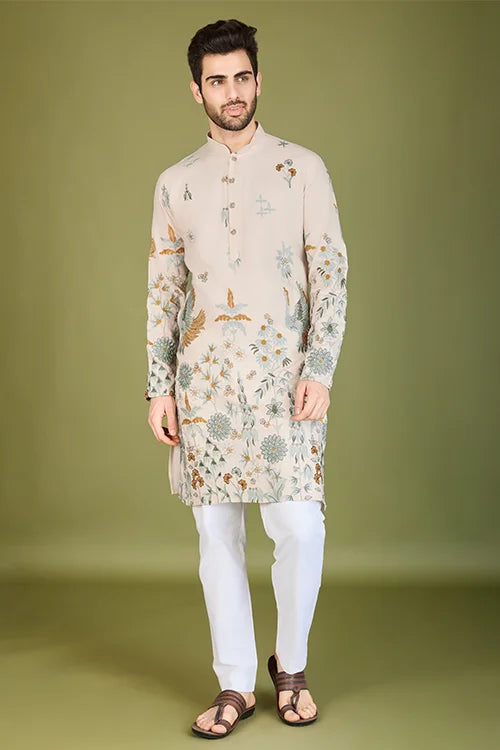
Beige is the menswear version of understated luxury. It allows fabric, weave and embroidery to become visible without colour dominating. Beige is excellent for morning weddings, engagement ceremonies and sophisticated groom-side dressing. It also gives maximum flexibility with accessories.

Use white or cream bottoms for a tonal look. Add brown mojaris and a classic watch for minimal styling. For more ceremony, add a textured jacket, gold-beige dupatta or brooch. Beige works particularly well with mirror work because the reflection becomes the detail.
Black: evening drama
Black kurtas are increasingly common at receptions, cocktail functions and modern sangeets. They make embroidery and mirror work stand out sharply. A black kurta with black pants creates a long monochrome silhouette, while ivory pants move the outfit back toward traditional contrast. Always consider family or regional colour customs before choosing black for a ceremony.
Black is also one of the easiest colours to rewear after the wedding. It can move into festive dinners, parties and formal family events with different footwear and jackets.
Green and olive
Green ranges from bright Navratri energy to deep wedding sophistication. Olive and bottle green are especially easy to style because they work with brown, tan, antique gold and ivory. Fresh green suits mehendi and daytime festivals, while deep green is excellent at night.
For a groom-side coordinated look, different men can wear related green shades rather than identical uniforms. This creates visual cohesion in group photographs without making everyone look the same.
Maroon and wine
Maroon is a classic wedding shade because it connects naturally to traditional Indian palettes. It works with ivory bottoms, antique gold and brown footwear. Wine is slightly cooler and often feels more evening-oriented. Both colours suit sangeet, receptions and winter weddings.
If the kurta is richly embroidered, keep the dupatta simple. If the kurta is plain silk or viscose, a printed or textured dupatta can add interest.
Mustard and yellow
Mustard is almost purpose-built for haldi, but it deserves a life beyond that event. It works for Navratri, Diwali, daytime mehendi and festive lunches. White bottoms keep it fresh. Brown accessories give earthiness. A mirror-work mustard kurta can look celebratory without a jacket.
White and ivory
White and ivory are foundational because they work with almost every jacket and dupatta. They can look ceremonial, minimal or Indo-western depending on styling. A white embroidered kurta with a richly patterned jacket is a classic wedding formula. An all-white kurta-pant set can feel much more contemporary.
Because light colours reveal fit clearly, tailoring matters. Make sure the inner layer and bottom are not unintentionally transparent under strong lighting.
Purple and jewel tones
Purple has become a strong alternative to navy and maroon. Deep purple feels regal at night, while lighter purple can work during the day. Pair deep purple with cream, black or tonal bottoms. Gold accessories warm it; silver-toned details make it cooler. Other jewel tones such as emerald, ruby-like red and deep teal can serve the same role.
Sky blue and dusty blue
Blue does not have to be dark. Sky and dusty blue are excellent for daytime weddings and summer celebrations. They work with white pants, tan footwear and silver or subtle gold details. Because pale blue is calm, embroidery becomes more visible.
How to choose colour by function
Haldi: mustard, yellow, pista, fresh green. Mehendi: green, olive, beige, pista. Sangeet: navy, black, maroon, purple. Wedding ceremony: beige, white, ivory, maroon, green, navy depending on customs. Reception: black, navy, wine, purple and deep jewel tones. These are suggestions, not rules; family dress codes come first.
How to coordinate as a couple
Matching exactly can look forced. Instead, coordinate through colour families or one repeated detail. If one partner wears pink, the other might use maroon, beige with a pink pocket square, or navy with a pink-toned dupatta. If one wears green, the other can choose beige with green detailing. The goal is harmony, not identical fabric.
How to coordinate groom-side groups
Choose a palette of two or three related colours. For example, beige, pista and olive; or navy, sky blue and ivory. This gives group photographs cohesion while letting each person choose a shade that suits his wardrobe. Standardise only one element such as the dupatta or pocket square if you want a stronger visual link.
Bottom colours
White and ivory are the most versatile. Tonal bottoms make outfits modern. Black works with black, navy, maroon and some jewel tones. Beige works with green, mustard and navy. Straight pants usually feel contemporary, churidar feels classic and dhoti-style bottoms can create a more traditional silhouette.
Footwear by colour
Tan and brown are excellent with beige, green, mustard, maroon and pista. Black works with navy, black and deep jewel tones. Ivory and gold-toned ethnic footwear can support ceremonial white or pastel looks. Prioritise comfort because wedding functions often involve hours of standing.
Dupattas and jackets
A contrasting dupatta can introduce a second colour without buying another kurta. A jacket can transform a simple base for a reception or wedding ceremony. If the kurta is embroidered, keep the jacket calmer. If the kurta is plain, a jacquard or embroidered koti can carry the design.
Fit matters more than colour theory
There is no point finding a “perfect” colour if the kurta shoulders are too wide. Check chest ease, armholes, sleeve length, side slits and overall length. Sit, raise your arms and walk. For sangeet, test dance movement. For ceremonies, make sure you can sit comfortably.
Online buying checklist
- Compare product colour across multiple photos.
- Read fabric composition.
- Check which pieces are included.
- Measure chest and shoulder against a kurta you already own.
- Check inventory by size.
- Plan the bottom and footwear before ordering accessories.
- Allow alteration time before the wedding.
- Read care instructions.
Common mistakes
One mistake is choosing colour only to match decor. Another is matching the couple too literally. A third is adding a contrasting jacket, dupatta and shoe colour all at once. Finally, men often under-plan alterations; a small sleeve or shoulder adjustment can do more for appearance than a new accessory.
Build a reusable wedding kurta wardrobe
If you attend many weddings, build around roles. Own one light daytime kurta, one deep evening kurta, one neutral embroidered kurta and one jacket that works with at least two of them. White and ivory bottoms can repeat. Brown and black footwear cover most combinations. This approach creates variety without needing a new full set for every invitation.
Frequently asked questions
Which kurta colour is safest for a wedding guest?
Navy, beige, green and maroon are versatile across many functions.
Can men wear black to Indian weddings?
Often yes for evening events, but family and regional customs vary.
Is pista only for daytime?
No, but its soft character is especially effective in daylight. Stronger accessories can carry it into evening.
What bottom works with most colours?
Ivory or white straight pants are the most versatile.
How do I coordinate with my partner?
Repeat one colour family or accessory accent rather than matching every piece.
Which colour photographs best at night?
Navy, black, maroon, wine, purple and deep green usually gain richness in evening light.
Which colour is best for rewear?
Navy, beige and black are especially flexible, but choose shades you genuinely enjoy.
Do I need a jacket?
No. A well-fitted kurta with good fabric and footwear can be fully wedding-ready without one.
Final thought
Men’s wedding colour in 2026 is about range. You can move from pista at lunch to navy at sangeet, beige at the ceremony and black at reception without changing your core style. Choose colour for light and occasion, then let fit and restraint do the rest. A good kurta should not only look right in one wedding photograph; it should earn another invitation.