Maharashtra, a state of dramatic diversity, stretches from the bustling metropolis of Mumbai to the ancient caves of Ajanta and Ellora, and from the verdant Western Ghats to the Deccan Plateau. It is a land of saints, warriors, and artists, with a rich history dominated by the formidable Maratha Empire. This powerful heritage is not just chronicled in its magnificent forts and temples; it is beautifully woven into its cultural fabric, most notably in its legendary Paithani sarees, distinctive Warli folk art, and regal traditions.
The state’s unique style is defined by a blend of strength and grace. Its tropical climate has fostered a preference for lightweight, breathable cottons and silks, ideal for both comfort and elegance. The history of the Maratha Empire, along with the patronage of the Peshwas, cultivated a sophisticated weaving culture and a distinctive style of adornment that exudes pride and prestige. Today, the timeless and vibrant traditions of Maharashtra are inspiring contemporary fashion, offering a rich palette of color, craft, and culture to the modern world.
Traditional Clothing / Ethnic Wear
Maharashtrian traditional attire is a powerful expression of its cultural identity, known for its unique draping styles, rich textiles, and symbolic jewelry. As a distinctive form of Indian wear, the clothing is designed to be both functional and elegant, reflecting a heritage of valor and artistic refinement.
Women’s Attire
The saree is the quintessential garment for Maharashtrian women, with the draping style being as significant as the fabric itself.
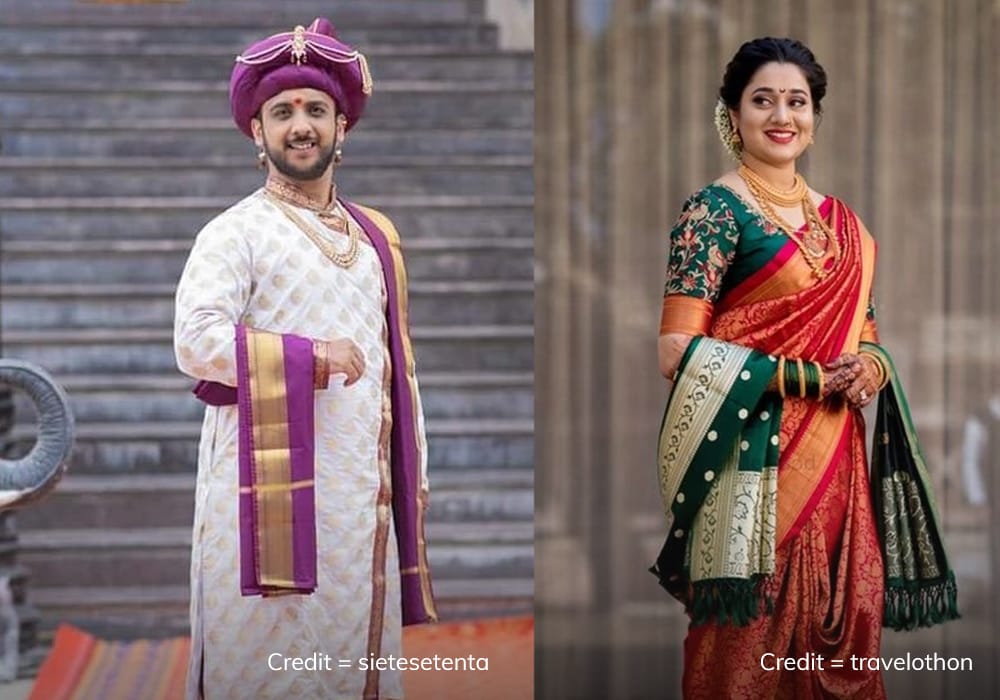
Nauvari Saree: The most iconic Maharashtrian garment is the Nauvari, or nine-yard saree. Unlike the standard five-yard saree, this longer version is draped in a distinctive style where the lower part is tucked between the legs to form a trouser-like silhouette. This “kashta” drape was historically worn by warrior women as it allowed for greater freedom of movement.
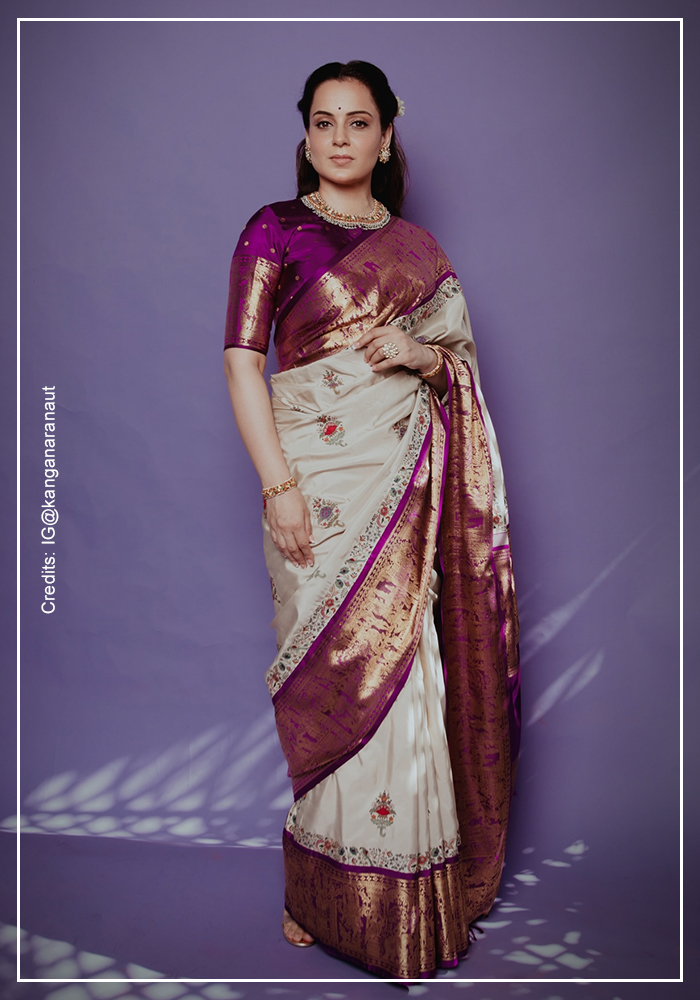
Paithani Saree: Hailing from the town of Paithan, the Paithani is the “Queen of Silks.” This handwoven silk saree is characterized by its rich, colorful body, an intricate gold zari pallu featuring peacock (mor) or lotus (kamal) motifs, and a unique square-patterned border. It is a prized possession, essential for any Maharashtrian bride.
Fabrics and Colors: Silk and cotton are the primary fabrics. Paithani sarees are known for their vibrant jewel tones like purple, green, and red. For daily wear, cotton sarees are common.
Men’s Attire
The traditional attire for men is simple, dignified, and reflects the state’s martial and agrarian roots.
Dhoti and Kurta: The classic outfit is the dhoti, a draped lower garment, paired with a simple kurta. For formal occasions, men may wear a waistcoat or jacket over the kurta.
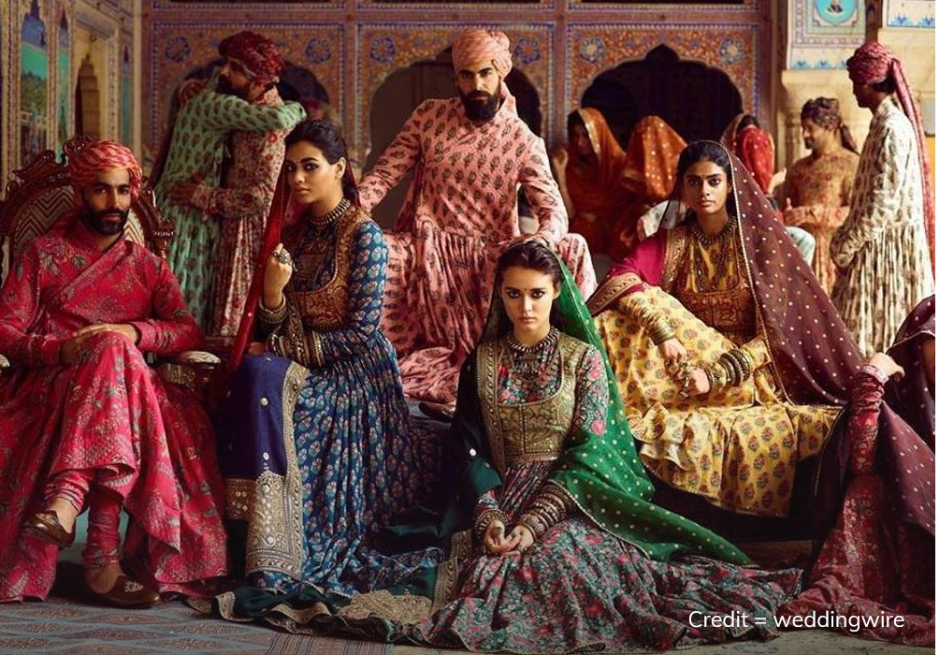
Pheta (Turban): The pheta is a traditional turban, a symbol of honor and pride. This long piece of cloth is wound around the head in a specific style and is an essential accessory for weddings and festivals.
Jewelry & Accessories
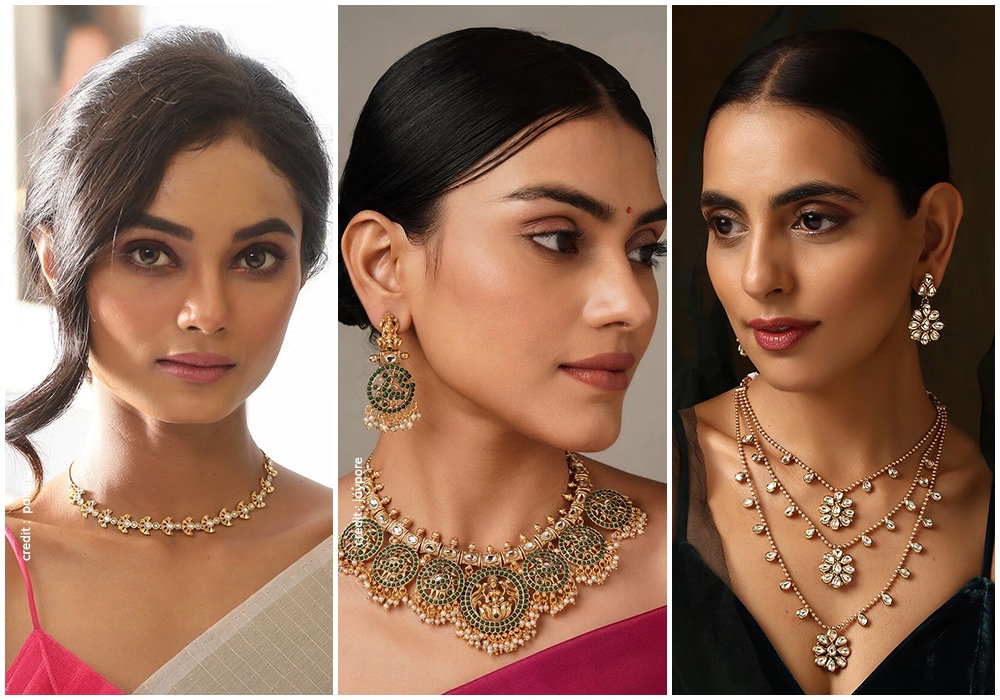
Maharashtrian jewelry is unique and symbolic, with designs that have been passed down through generations.
Nath (Nose Ring): The Maharashtrian nath is a distinctive pearl and gemstone-studded nose ring with a unique paisley shape, an essential part of a bride’s look.
Kolhapuri Saaj: This is a traditional and auspicious necklace from Kolhapur, typically consisting of 21 design elements, including ten avatars of Lord Vishnu.
Green Bangles (Chura): Stacks of green glass bangles are considered highly auspicious for married women, symbolizing fertility and prosperity.
Crafts, Textile Techniques & Prints
The soul of Maharashtra’s style lies in its ancient and highly skilled craft traditions, particularly in weaving and folk art.
Paithani Weaving: This is one of India’s most cherished weaving traditions. A Paithani saree is woven on a handloom using a tapestry weaving technique, where multiple threads of different colors are woven together to create a design that appears identical on both sides of the fabric. The intricate pallu can take weeks or even months to complete.
Himroo Fabric: Originating from Aurangabad, Himroo is a luxurious fabric made from a blend of silk and cotton. It is known for its intricate designs inspired by Persian art, with motifs of flowers, birds, and geometric patterns.
Warli Painting: This is the traditional art form of the Warli tribe from the northern Sahyadri range. Characterized by its simple, geometric shapes circles, triangles, and squares Warli art depicts scenes of daily life, rituals, and nature. This art form is now widely used to decorate textiles, creating unique and artistic sarees, kurtas, and home furnishings.
Cultural Context – Lifestyle, Tradition & Heritage Influences
The clothing and crafts of Maharashtra are deeply connected to its geography, history, and social fabric. The tropical climate makes breathable fabrics like cotton a practical choice for everyday life. The unique Nauvari drape is a testament to the state’s history, reflecting the active and martial role women often played in the Maratha empire.
The Maratha empire’s legacy is the most significant influence on Maharashtrian style. The pheta turban and the Nauvari saree are symbols of Maratha pride and valor. Royal patronage, especially from the Peshwas, was crucial in elevating the craft of Paithani weaving to an art form. Folk traditions, particularly the vibrant Lavani dance and celebrations like Ganesh Chaturthi, are important cultural events where traditional attire is displayed with immense enthusiasm and pride.
When & How These Styles Are Worn Today
While rooted in history, Maharashtrian styles remain a vibrant and integral part of modern life.
Everyday vs. Special Occasions: Simple cotton sarees or salwar kameez are common for daily wear. For weddings, festivals, and religious ceremonies, women proudly wear their Paithani or silk Nauvari sarees, adorned with traditional gold jewelry. Men wear kurtas with a pheta for these special events.
Modern Reinterpretations: The timeless appeal of Maharashtrian crafts has found a firm place in contemporary fashion. Warli art motifs are printed on everything from t-shirts and bags to modern dresses. Paithani borders and motifs are being incorporated into lehengas, jackets, and dupattas. The Kolhapuri saaj has inspired modern necklace designs.
Styling Tips:
Pair a classic Paithani saree with a traditional nath and pearl jewelry for an authentic, regal look.
Incorporate a Warli-printed scarf or stole into a modern, minimalist outfit to add an artistic, tribal-chic element.
Style a simple handloom saree with a statement Kolhapuri necklace for a look that is both traditional and sophisticated.
Why It Matters – Heritage, Identity & Fashion Inspiration
Preserving the craft traditions of Maharashtra is about safeguarding a unique cultural identity and supporting the artisan communities who are the custodians of these ancient skills. Each handwoven Paithani saree is a masterpiece of art and patience, while every Warli painting tells a story of community and a deep connection to nature.
In a world of fast-paced fashion, the authentic, handcrafted, and meaningful styles of Maharashtra offer a powerful alternative. They provide a rich source of inspiration for global fashion, showcasing how heritage and artistry can be woven into a modern lifestyle with grace and pride. Supporting these crafts is an investment in cultural continuity and artistic excellence.
Discover the Warrior Spirit and Artistic Soul
Maharashtra’s stylistic heritage is a compelling narrative of valor, spirituality, and artistic brilliance. From the majestic drape of a Nauvari saree to the intricate motifs of a Paithani, every element speaks of a land that is proud of its history and deeply connected to its artistic roots.
We encourage you to explore this world of regal elegance and folk charm. Consider adding a piece of Maharashtra’s heritage to your collection, whether it’s a timeless Paithani dupatta, a piece of jewelry inspired by traditional designs, or a contemporary garment featuring Warli art. By doing so, you are not only embracing a beautiful and powerful aesthetic but also helping to celebrate and sustain a magnificent cultural legacy.
The post The Ultimate Guide to Maharashtra – Heritage, Textiles & Traditional Style appeared first on Aza Editorials.