
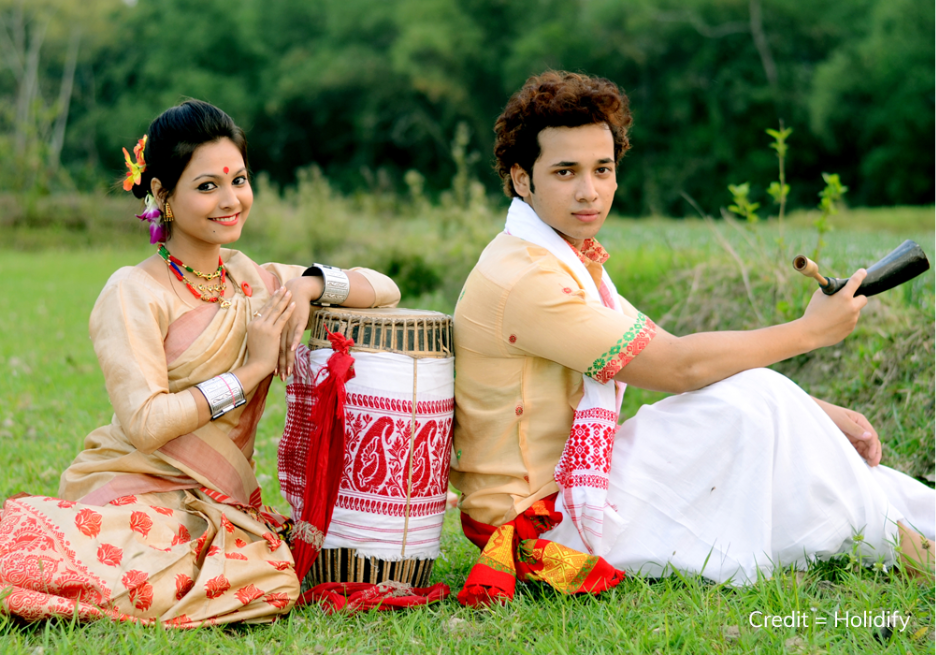
Assam, the gateway to Northeast India, is a land of breathtaking beauty, where lush tea gardens carpet rolling hills and the mighty Brahmaputra River carves its path through fertile plains. This vibrant state is not just famous for its one-horned rhinoceros and aromatic tea; it is also a treasure trove of cultural traditions, most notably its incredible silk heritage and the joyous Bihu festival. The rhythm of life here is deeply connected to nature, a relationship that is beautifully woven into its traditional clothing and textiles.
The region’s warm and humid climate has long favored the production and use of lightweight, breathable fabrics, making Assamese silks and cottons legendary for their comfort. A rich history, dominated by the powerful Ahom dynasty, nurtured a sophisticated weaving culture that produced some of the world’s most unique and luxurious silks. Today, the elegant and understated style of Assam continues to inspire fashion designers and enthusiasts, offering a timeless blend of natural beauty and refined craftsmanship.
Traditional Clothing / Ethnic Wear
Assamese attire is a graceful reflection of its culture—elegant, intricately detailed, and deeply rooted in tradition. The garments are designed for comfort and practicality, serving as a proud display of the state’s masterful weaving skills.
Women’s Attire
The most iconic ensemble for Assamese women is the elegant and graceful Mekhela Chador.
- Mekhela Chador: This is a traditional two-piece garment that resembles a saree. The Mekhela is the lower part, a wide piece of cloth pleated and tucked around the waist like a sarong. The Chador is the upper part, a long scarf draped elegantly over the shoulder, covering the blouse.
- Riha: Traditionally worn under the Chador, the Riha is a narrow piece of cloth wrapped tightly around the chest. Today, it is primarily worn during weddings and other important ceremonies.
- Fabrics and Motifs: Assam is famous for its three indigenous silks: the golden Muga silk, the warm Eri silk, and the white Pat silk. The motifs woven into these fabrics are inspired by nature, including flowers, birds (like peacocks and parrots), and rhinos, as well as geometric patterns.
Men’s Attire
The traditional attire for Assamese men is simple, dignified, and practical.
- Dhoti and Kurta: The primary outfit is the dhoti (also called suria), a draped lower garment, paired with a kurta or a simple shirt. This comfortable ensemble is perfect for the local climate.
- Gamosa: The gamosa is the most recognizable symbol of Assamese culture. It is a rectangular white cloth with a red border and woven motifs on one end. While it is primarily used as a towel or to honor guests, it is also worn by men around the neck during Bihu dance performances.
Jewelry & Accessories
Assamese jewelry is unique in its design, often inspired by nature and local flora and fauna.
- Junbiri: A crescent-shaped pendant, the junbiri (meaning “moon”) is a classic piece of Assamese jewelry.
- Gamkharu: These are large, silver or gold-plated bracelets with a clasp, traditionally worn by men but now popular with women as well.
- Traditional Ornaments: Other notable pieces include the Thuria (a type of earring), Loka Paro (pigeon-shaped pendants), and various necklaces made with black, red, and gold beads.
Crafts, Textile Techniques & Prints
The soul of Assamese style lies in its ancient sericulture and handloom weaving traditions, which produce textiles of unparalleled quality.
- Muga Silk Weaving: Assam is the exclusive producer of the lustrous, golden-hued Muga silk. This rare silk is produced by a semi-domesticated silkworm and is known for its extreme durability and natural shimmer, which is said to increase with every wash. Muga Mekhela Chadors are prized possessions, often passed down through generations.
- Eri Silk Production: Known as “Ahimsa” or peace silk, Eri silk is produced without killing the silkworm. The resulting fabric is warm, soft, and has a texture similar to wool, making it perfect for shawls and jackets.
- Handloom Weaving: Weaving is an integral part of rural life in Assam, with almost every household owning a loom. Weavers, primarily women, use traditional looms to create intricate designs, a skill passed down from mother to daughter. The town of Sualkuchi is known as the “Manchester of Assam” for its large-scale handloom industry.
Cultural Context – Lifestyle, Tradition & Heritage Influences
The clothing and crafts of Assam are deeply intertwined with its environment, history, and social ethos. The humid, subtropical climate makes lightweight fabrics like cotton and the breathable Assamese silks the ideal choice. The two-piece Mekhela Chador is a practical design, allowing for ease of movement.
The gamosa holds immense cultural significance, symbolizing love, respect, and hospitality. It is used to welcome guests, honor elders, and as an integral part of religious and social ceremonies. Historically, the Ahom dynasty, which ruled Assam for 600 years, was a great patron of the arts. They established royal looms and encouraged the production of fine silks and intricate textiles, which were used for royal attire and as diplomatic gifts.
When & How These Styles Are Worn Today
While rooted in history, Assamese styles remain vibrant and relevant in contemporary life.
- Everyday vs. Special Occasions: Simple cotton or Eri silk Mekhela Chadors are worn for daily activities. For weddings and the Rongali Bihu festival, women don magnificent Muga or Pat silk Mekhela Chadors, adorned with intricate zari work and elaborate motifs.
- Modern Reinterpretations: Designers are creatively incorporating Assamese textiles into modern fashion. You can find jackets and dresses made from Eri silk, sarees with Assamese motifs, and modern silhouettes created from Muga silk. The gamosa has been adapted into scarves, stoles, and even decorative elements on bags and apparel.
- Styling Tips:
- Drape an Eri silk shawl over a western outfit for an elegant, earthy look.
- Pair a handwoven Assamese cotton saree with minimalist jewelry for a chic, sophisticated style.
- Use a statement piece of Assamese jewelry, like a Gamkharu bracelet, to add a touch of traditional charm to any ensemble.
Why It Matters – Heritage, Identity & Fashion Inspiration
Preserving the textile crafts of Assam is about safeguarding a unique cultural identity and supporting the livelihoods of thousands of artisans. Each handwoven Mekhela Chador and every strand of Muga silk represents centuries of accumulated knowledge, skill, and cultural pride.
In a world increasingly dominated by mass-produced fashion, the authenticity and sustainable nature of Assamese handlooms offer a powerful and meaningful alternative. They inspire global fashion with their rare silks, nature-inspired motifs, and the timeless elegance of their designs, proving that tradition is a profound source of modern style.
Explore the Golden Heritage of Assam
Assam’s style heritage is a graceful narrative of nature, culture, and craftsmanship. From the golden sheen of a Muga silk Mekhela Chador to the symbolic warmth of a gamosa, every element speaks of a land that has mastered the art of weaving its soul into its fabrics.
We encourage you to discover this world of understated elegance. Consider adding a piece of Assam’s artistry to your wardrobe, whether it’s a warm Eri shawl, a classic cotton gamosa, or a treasured silk ensemble. By doing so, you not only embrace a stunning aesthetic but also help to sustain and celebrate one of India’s most precious textile legacies.
The post The Ultimate Guide to Assam – Heritage, Textiles & Traditional Style appeared first on Aza Editorials.