
Gujarat, a state on India’s western coast, is a land of vibrant festivals, rich history, and a spirit of entrepreneurship. With its long coastline and bustling port cities, it has been a center of trade and culture for centuries. This legacy is brilliantly reflected in its traditional attire and world-renowned textiles. From the colorful celebrations of Navratri to its sun-drenched landscapes, Gujarat’s identity is woven into every thread of its fabric.
The state’s semi-arid climate has shaped the preference for lightweight, breathable fabrics, while its history as a major trade hub exposed it to diverse influences, enriching its own craft traditions. These time-honored techniques continue to inspire fashion and design worldwide, blending ancient artistry with modern style. This guide explores the dazzling world of Gujarati heritage, from its iconic garments to its masterful textile crafts.
Traditional Clothing / Ethnic Wear
Gujarati clothing is a celebration of color, craft, and community. The garments are designed for comfort in the warm climate and are brought to life with intricate embellishments that tell stories of the region’s artistic soul.
Women’s Attire
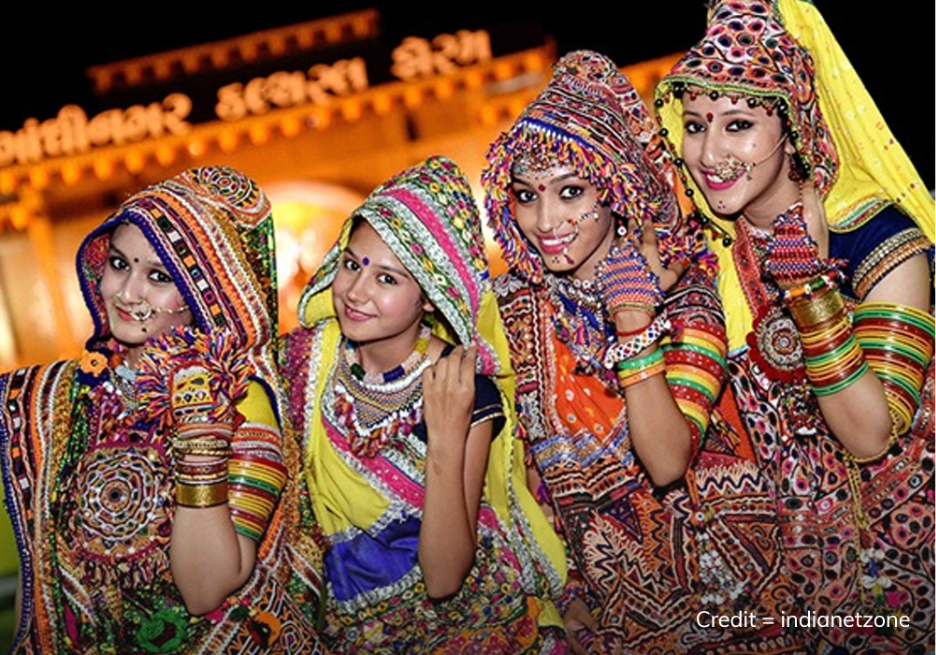
The most iconic ensemble for Gujarati women is the vibrant and festive chaniya choli.
- Chaniya Choli: This three-piece outfit consists of a chaniya (a flared skirt), a choli (a fitted blouse), and a dupatta (a long scarf). The chaniya is often adorned with elaborate mirror work, embroidery, and bold appliqué. During the Navratri festival, these outfits become a canvas for spectacular artistry.
- Sarees: Gujarat is also home to unique saree styles, most notably the Bandhani and Patola sarees. These are prized for their intricate patterns and luxurious feel. The traditional Gujarati saree drape, with the pallu (the decorated end) brought to the front, is distinct and elegant.
- Fabrics and Colors: Cotton is the fabric of choice for daily wear, prized for its breathability. For festive occasions, silks and rich brocades are preferred. The color palette is typically bright and cheerful, with reds, yellows, greens, and blues dominating the designs.
Men’s Attire
Traditional menswear in Gujarat is comfortable, functional, and stylish.
- Kediyu and Dhoti: The kediyu is a frock-style tunic, often flared and pleated, with vibrant embroidery along the borders and chest. It is traditionally paired with a dhoti or a churidar (a fitted trouser). This outfit is especially popular during festivals and folk dances like Garba.
- Turbans: The turban, known locally as a paghdi or phento, is an essential accessory for men. The style of tying and the color of the turban can signify the wearer’s region or community.
- Mojris: Handcrafted leather footwear, often decorated with embroidery, completes the traditional look.
Jewelry & Accessories
Gujarati jewelry is known for its bold designs and intricate craftsmanship.
- Silver Ornaments: Oxidized silver jewelry is a staple, with women wearing chunky necklaces, large earrings (jhumkas), and stacks of bangles.
- Patla Bangles: These broad, often gold-plated bangles are a traditional part of a bride’s trousseau.
- Embroidered Footwear and Bags: Accessories are rarely plain. Footwear and bags are often decorated with the same mirror work and colorful threadwork found on the clothing, creating a cohesive and festive look.
Crafts, Textile Techniques & Prints
Gujarat’s greatest contribution to the world of fashion is its incredible array of textile crafts, perfected over centuries.
- Bandhani (Tie-Dye): Gujarat is a major center for this meticulous craft. The fabric is plucked and tied with thread into thousands of tiny knots before being dyed, resulting in beautiful patterns of dots, squares, and waves. Kutch and Jamnagar are famous for their exquisite Bandhani work.
- Patola Weaving: The Patola from Patan is a double ikat woven silk fabric, considered the ultimate symbol of luxury. Both the warp and weft threads are tie-dyed before weaving, a highly complex process that results in identical, intricate patterns on both sides of the fabric.
- Ajrakh Block Printing: This sophisticated form of block printing from the Kutch region uses natural dyes and complex geometric and floral motifs. The process is multi-step, involving repeated printing and dyeing to achieve a rich, layered effect, typically in shades of indigo and crimson.
- Mirror Work (Shisha Embroidery): One of the most recognizable Gujarati crafts, mirror work involves attaching small pieces of reflective glass to fabric with colorful embroidery. It adds a dazzling sparkle to chaniya cholis, kurtas, and home furnishings.
- Mashru Fabric: This unique handwoven textile has a silk warp and a cotton weft, creating a fabric with a glossy silk surface and a comfortable cotton backing. It was historically developed to allow Muslim men to wear silk-like fabric, as pure silk was discouraged.
Cultural Context – Lifestyle, Tradition & Heritage Influences
The clothing and crafts of Gujarat are deeply intertwined with its environment, history, and social customs.
The semi-arid climate makes light, airy fabrics like cotton and Mashru ideal. Full-coverage garments and head coverings like the dupatta and turban provide protection from the sun. The vibrant colors are a joyful expression of life, standing out against the often-dry landscape.
Gujarat’s long history as a maritime trade hub brought immense wealth and exposure to different cultures. This fueled the demand for luxurious textiles like Patola and fostered a rich environment for crafts to flourish. Royal families were major patrons, commissioning elaborate garments and textiles that pushed the boundaries of artistry. Folk traditions, especially the energetic Garba and Dandiya Raas dances performed during Navratri, have also heavily influenced clothing design, favoring flared silhouettes that create dramatic movement.
When & How These Styles Are Worn Today
While steeped in history, Gujarati styles are very much alive and continue to evolve.
- Everyday vs. Special Occasions: Simple cotton chaniya cholis or kurtas with Ajrakh prints are worn for daily activities in many rural areas. For weddings and festivals, especially Navratri, people embrace the most elaborate and brightly colored outfits, featuring heavy mirror work and luxurious Patola silks.
- Modern Reinterpretations: Designers constantly find new ways to incorporate Gujarati crafts into contemporary fashion. You can find Ajrakh prints on modern jackets, Bandhani patterns on dresses and scarves, and mirror work embellishing denim and accessories. Indo-western fusion wear, like pairing a chaniya with a crop top or a Kediyu-style tunic with jeans, is extremely popular.
- Styling Tips:
- Use a Bandhani or Ajrakh scarf to add a pop of color and pattern to a simple outfit.
- Pair a traditional embroidered skirt with a modern, solid-colored top for a balanced look.
- Accessorize with chunky silver jewelry to give any outfit a touch of Gujarati bohemian flair.
Why It Matters – Heritage, Identity & Fashion Inspiration
Supporting Gujarati crafts is about more than just appreciating beautiful textiles. It is about preserving centuries-old traditions, honoring the incredible skill of artisans, and sustaining local economies. Each Patola saree that takes months to weave and every hand-stamped Ajrakh cloth is a piece of living history.
In an era dominated by fast fashion, the authenticity and artistry of these handcrafted textiles offer a powerful alternative. They inspire designers and fashion lovers around the world with their bold colors, intricate patterns, and timeless appeal, proving that true style is rooted in culture and craftsmanship.
Embrace the Vibrancy of Gujarat
Gujarat’s stylistic heritage is a dazzling tapestry of color, craftsmanship, and culture. From the joyful twirl of a chaniya choli to the intricate geometry of an Ajrakh print, every element tells a story of a region with a rich past and a dynamic present.
We invite you to explore this vibrant world. Consider adding a piece of Gujarati artistry to your wardrobe, whether it’s a colorful Bandhani dupatta, a statement silver necklace, or a unique block-printed top. In doing so, you are not only embracing a stunning aesthetic but also helping to ensure these priceless craft traditions continue to thrive.
The post The Ultimate Guide to Gujarat – Heritage, Textiles & Traditional Style appeared first on Aza Editorials.