
For generations, the cultural narrative surrounding mehendi has remained steadfastly uniform. We associate it with the brides. We picture delicate vines, intricate paisleys, and a hyper-feminine aesthetic that blankets the hands and arms in a maze of henna. Grooms, if they participated at all, often settled for a minimalist dot on the palm or a hidden initial tucked away out of sight.
But style, like culture, is fluid. The narrative is shifting, and the modern groom is demanding a seat at the aesthetic table. Enter Rishab Rikhiram Sharma, a key figure driving a massive visual shift in wedding menswear. He treats mehendi not as a fleeting bridal tradition, but as an expressive, intentional medium rooted deeply in personal identity.
Rishab’s approach creates an entirely new visual language for grooms. In his world, mehendi becomes a deliberate extension of personal style, carrying the same visual weight as a vintage watch, a bespoke sherwani, or curated jewellery. He proves that henna can be masculine, bold, and fiercely individualistic.
Here is a breakdown of the eight defining style cues from his groundbreaking mehendi aesthetic, offering a blueprint for the modern groom.
The Power of the Solitary Statement Motif
Gone are the days when groom mehendi meant either entirely bare hands or chaotic, full-hand coverage. Rishab gravitates toward singular, central motifs that demand attention.
Rather than filling every inch of skin with filler patterns, his looks often feature a striking, isolated design placed deliberately on the back of the hand or the center of the palm. This focal point anchors the entire look. It acts almost like a family crest or a signet ring, projecting confidence and clear intent without overwhelming the hands.
The Style Takeaway: Treat your mehendi like a statement piece. Choose one defining graphic for the center of the hand rather than spreading thin, disconnected designs across the fingers and palms.
Symbolism Over Symmetry
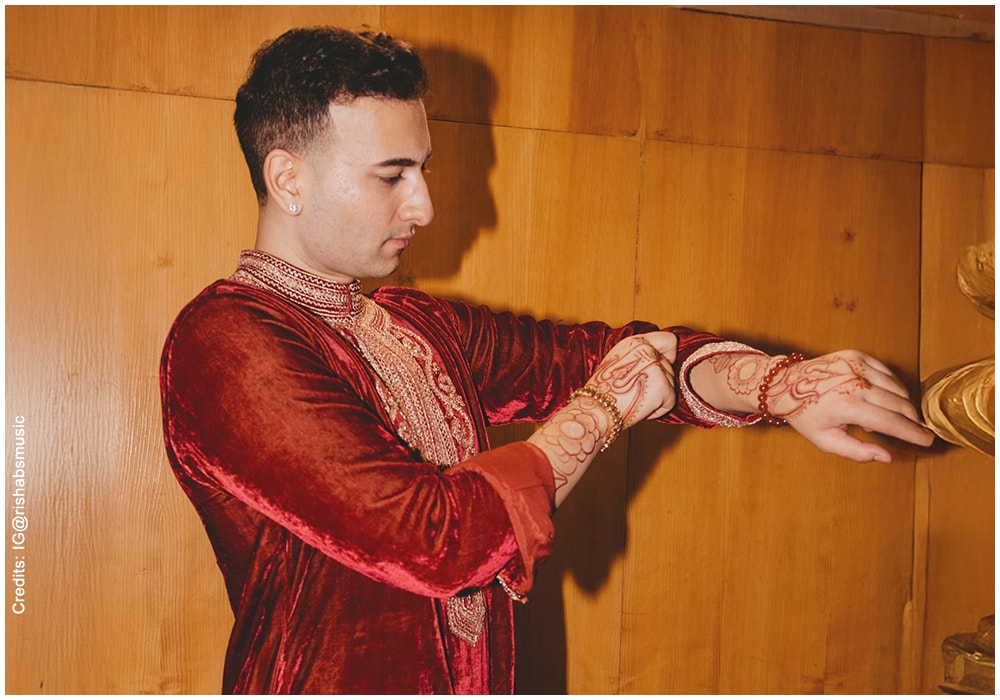
Aesthetic impact deepens when it carries personal meaning. Rishab’s mehendi frequently integrates symbolic elements that speak to his life, art, and cultural roots.
Whether it is a nod to his musical heritage, sacred geometry, or a deeply personal cultural insignia, the designs go beyond mere decoration. They tell a story. By weaving these sacred or personal symbols into the henna, the artwork becomes an intimate reflection of the groom’s identity, transforming a standard wedding ritual into an act of self-expression.
The Style Takeaway: Embed elements of your own story into the design. Whether it is a subtle motif representing your craft, your heritage, or a shared memory, meaningful symbolism elevates the aesthetic from decorative to deeply personal.
Graphic Lines and Architectural Boldness
Intricate, hair-thin detailing often characterizes traditional mehendi. Rishab shatters this expectation by opting for bold, graphic lines that feel distinctly modern and architectural.
His chosen patterns feature thicker strokes, sharp angles, and robust geometric shapes. This stylistic choice provides a grounded, inherently masculine edge to the art form. The thicker henna application also stains darker, creating a striking contrast against the skin that reads more like a permanent tattoo than a temporary wedding design.
The Style Takeaway: Ask your mehendi artist to use a thicker cut on the henna cone. Prioritize strong, clear, geometric lines over dizzying, microscopic details.
The Forearm Extension
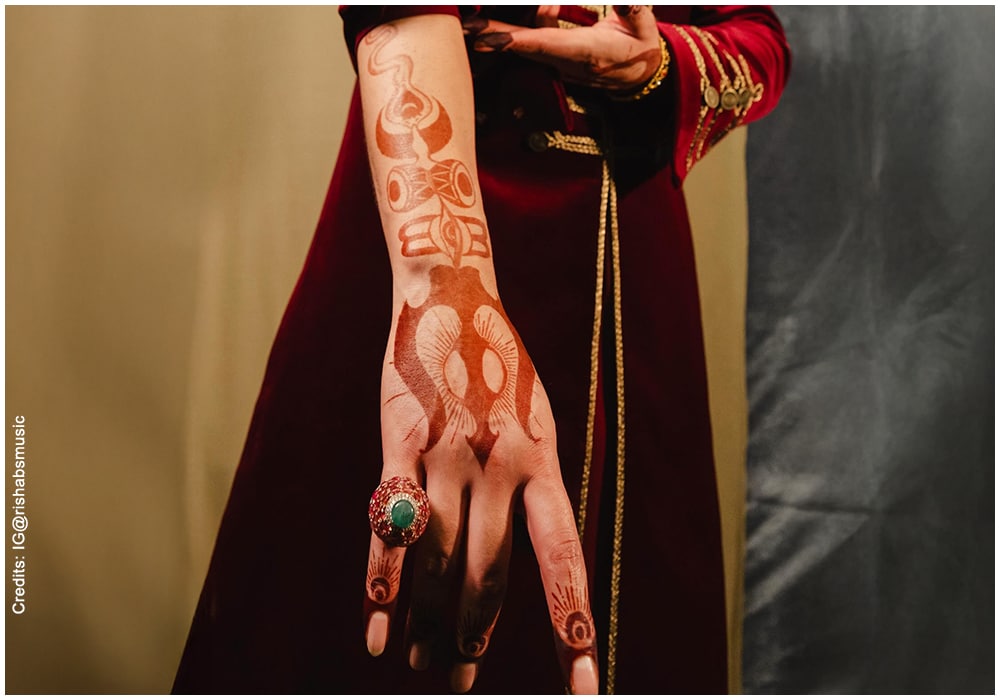
Why restrict art to the palms? One of the most compelling aspects of Rishab’s aesthetic is how he treats mehendi as a wearable accessory that extends up the wrist and onto the forearm.
By pulling the design past the wrist bone, the mehendi interacts directly with the cuffs of his clothing. It creates a seamless visual bridge between the skin and the garment. This approach mimics the placement of bracelets or a timepiece, adding a layer of rugged elegance to his overall silhouette.
The Style Takeaway: Extend your design past the wristline. Let the henna peek out from beneath your jacket or kurta cuff to serve as a permanent accessory throughout the celebrations.
Sartorial Synergy: Pairing with Jewels and Textiles
Rishab understands that mehendi does not exist in a vacuum. It is one component of a larger sartorial vision.
His bold henna designs invariably complement the textures of his clothing and the weight of his jewelry. A heavy, geometric mehendi pattern on the back of the hand sits perfectly alongside stacked metallic bracelets, a statement watch, or raw gemstone rings. The dark stain of the henna plays against rich silks and woven brocades, creating a layered, multi-dimensional look that feels incredibly curated.
The Style Takeaway: Consider your entire attire when finalizing your mehendi design. Match the scale of your henna to the jewellery you plan to wear, ensuring the skin art and metal accents enhance rather than compete with one another.
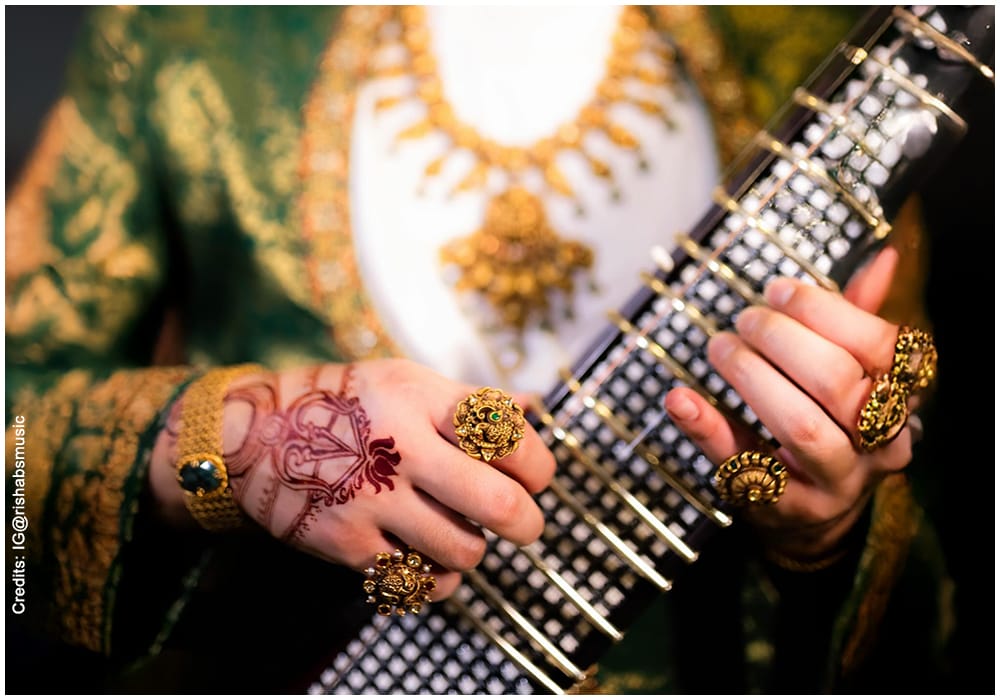
The Art of Empty Space
In design, what you leave out is just as important as what you include. Rishab’s mehendi heavily utilizes negative space to create maximum visual impact.
By allowing the natural skin to breathe around thick, dark motifs, the henna pops with much greater intensity. This deliberate use of empty space prevents the design from looking cluttered or messy. It provides a clean, breathable aesthetic that feels highly intentional and editorial.
The Style Takeaway: Embrace the blank skin. Instruct your artist to leave significant negative space around your core motifs to make the dark henna lines truly stand out.
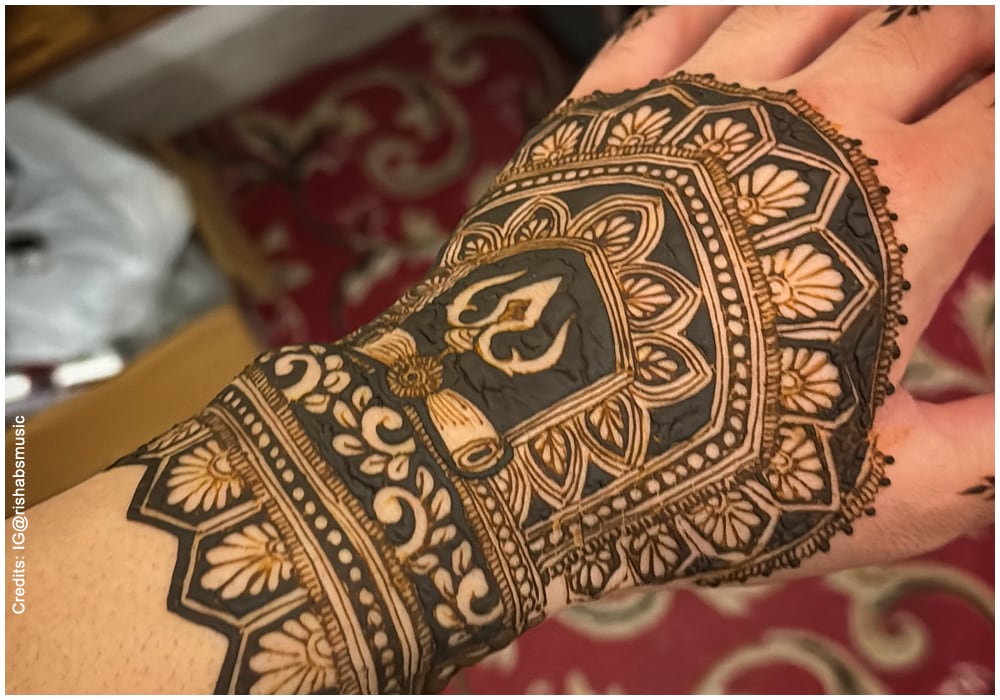
Designing for the Lens and the Stage
Weddings are highly photographed events and grooms’ wear must look exceptional in motion. Rishab’s mehendi choices are inherently photogenic.
Because he avoids overly intricate, microscopic patterns, his designs do not blur into a muddy smudge from a distance. The bold lines and strategic placement ensure the artwork catches the light and the camera lens effortlessly, whether he is adjusting his collar, holding a drink, or participating in the ceremony.
The Style Takeaway: Test the scale of your design from a few feet away. Bold, clear shapes will photograph beautifully and remain distinct in both candid and posed shots.
Tradition, Remixed
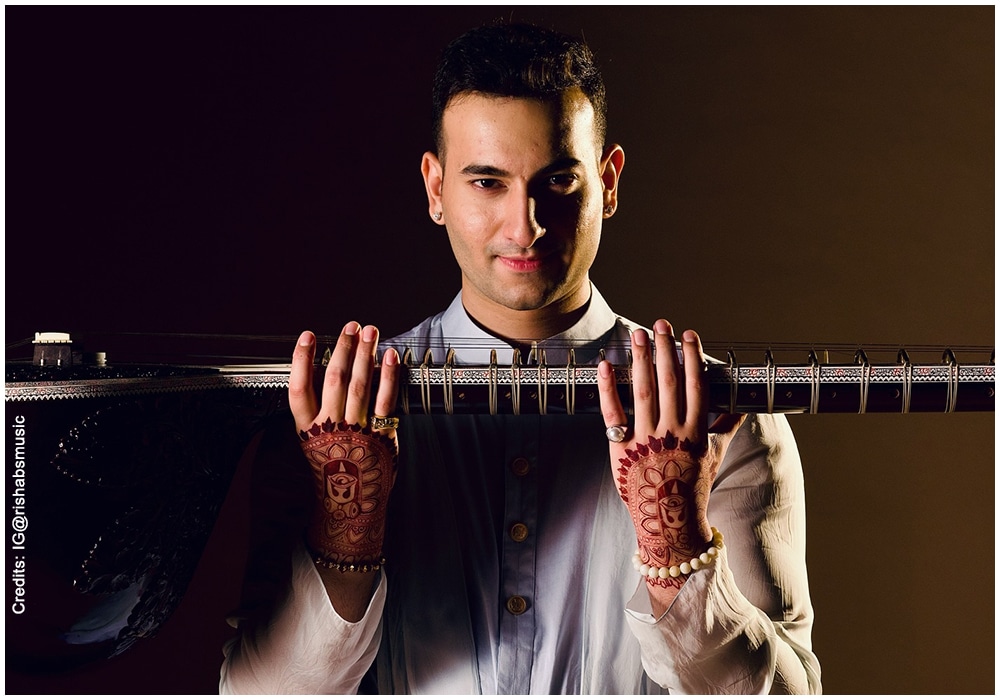
Perhaps the most fascinating element of Rishab’s approach is that he does not abandon tradition; he remixes it.
He takes classic, centuries-old motifs—like mandalas, lotuses, or architectural arches and strips them down to their most striking, minimalist forms. This reinterpretation bridges the gap between honoring cultural roots and projecting a forward-thinking, contemporary fashion sense.
The Style Takeaway: You do not have to invent entirely new shapes. Take a classic cultural motif that resonates with you and ask your artist to simplify it into a bold, modern, geometric format.
A New Era of Expression
We are witnessing the definitive end of mehendi as a strictly gendered tradition. Grooms no longer need to sit on the sidelines of this aesthetic experience, settling for a token dot of henna. They now have the space, the permission, and the inspiration to approach mehendi as a profound form of sartorial self-expression. With trailblazers like Rishab Rikhiram Sharma leading the shift, groom mehendi has evolved from a quiet afterthought into the ultimate canvas for modern, bold identity.
The post Rishab Rikhiram Sharma’s Bold Mehendi Might Be the Coolest Groom Trend Yet appeared first on Aza Editorials.