
There is a certain charm to summer weddings. The golden hour lasts longer, the colors are bright, and the celebrations feel incredibly vibrant. However, dressing for a warm-weather wedding presents a distinct challenge. You want to look effortlessly glamorous without melting under the sun. This brings us to the ultimate ethnic wear dilemma: should you choose a rich silk saree or a breezy organza saree? Both fabrics offer stunning possibilities for a wedding guest or a bridesmaid, but they serve entirely different purposes when the temperatures rise. Let’s examine silk vs organza sarees, review some of the top designs, and styling tips to help you make an informed choice for your next summer event.
Silk vs Organza Sarees: The Great Fabric Debate

Understanding how these two fabrics behave in warm weather is the first step to making your decision. Here is a closer look at what each material brings to the table.
The Timeless Appeal of Silk
Silk sarees are the unrivaled treasures of Indian ethnic wear, captivating all with their elegance and grace. They look beautiful, carry a natural sheen, and hold intricate weaving better than almost any other fabric.
Pros for Summer Weddings:
- Unmatched Elegance: Nothing looks quite as regal as a pure silk saree.
- Breathability of Pure Blends: If you choose a lightweight, pure silk like Chanderi silk or a very fine Banarasi, the natural fibres will allow your skin to breathe.
- Stunning Photographs: The luxurious fall and subtle lustre of silk look incredible in wedding photos.
Cons for Summer Weddings:
- Heat Retention: Heavier silks, like traditional Kanjeevarams or thick Banarasi weaves, trap heat and can make you sweat during outdoor daytime events.
- Marks: Sweat stains show up easily on solid-colored silk, which can be difficult to manage during a summer afternoon.
The Ethereal Charm of Organza
Organza sarees have taken the fashion world by storm, and it is easy to see why. This sheer fabric looks like a dream and feels like a feather.
Pros for Summer Weddings:
- Lightweight: Organza is incredibly light, making it the perfect companion for hot and humid weather.
- Modern Aesthetic: It offers a contemporary vibe that works beautifully for modern wedding themes, haldi ceremonies, and daytime receptions.
- Cooling Sheer Texture: The open weave allows air to flow freely, keeping you cool throughout the event.
Cons for Summer Weddings:
- Stiff Drape: Organza tends to puff out rather than cling to your body. If you want a figure-hugging silhouette, this fabric might not be your best bet.
- Delicate Nature: The sheer fabric catches on sharp jewellery or embellished clutches easily, requiring careful handling.
Unmissable Saree Picks for Summer Weddings
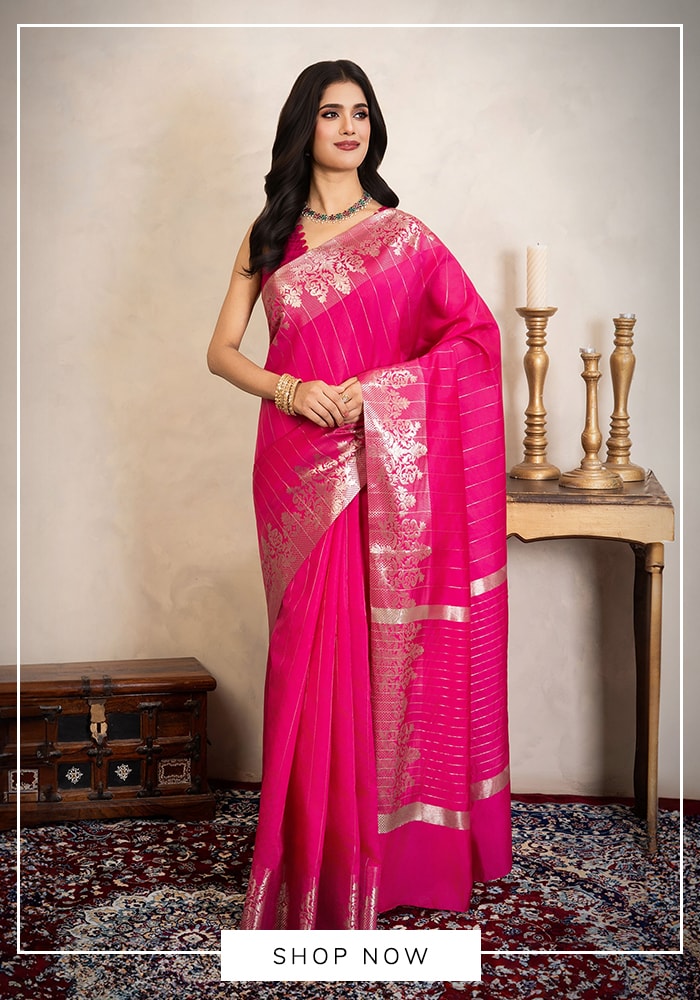
Exquisite Banarasi Silk Saree
This Banarasi silk saree features intricate weaves and traditional motifs that bring a sense of grandeur to any occasion. Its rich patterns and vibrant color ensure you stand out at any summer wedding.
The classic elegance of this drape is ideal for formal receptions or evening parties where you want to make a regal statement.
Crinkled Organza Tissue Saree
This piece stands out with its organza tissue fabric, delicately crafted to create a sophisticated look.
Perfect for daytime or outdoor celebrations, this saree catches the sunlight beautifully and moves with a soft, cloud-like grace. The matching unstitched velvet blouse piece allows for creative styling.

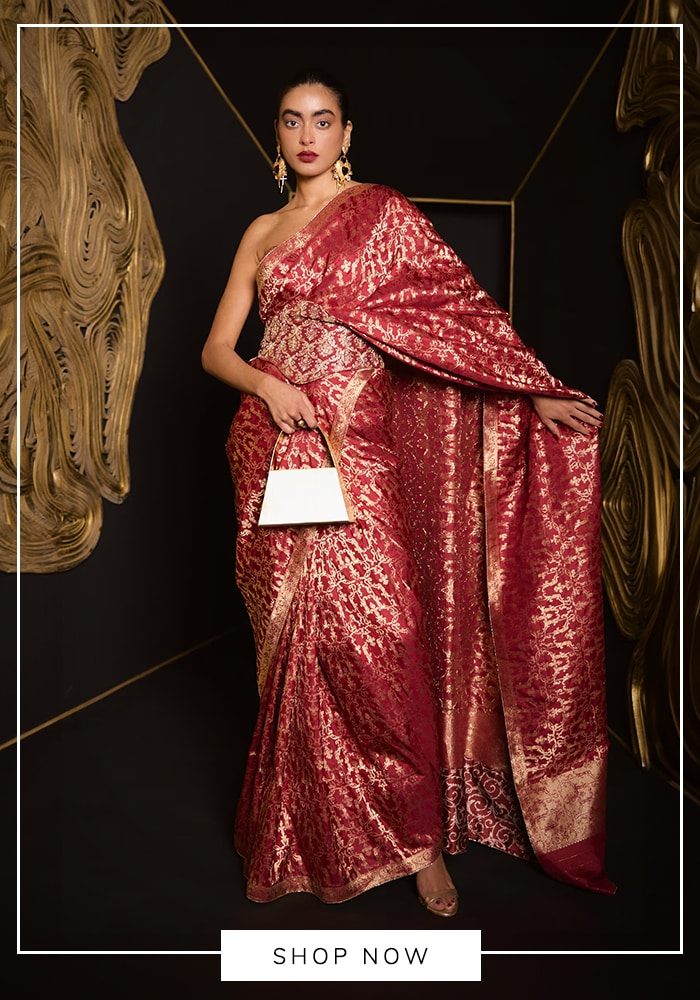
Opulent Embossed Silk Saree
Blending artistic cutwork with embossed detailing, the Ekaya Banaras silk saree combines tradition and innovation. Its silk fabric is comfortable in summer while still exuding a rich, celebratory aura.
The combination of delicate craft and bold color makes this an ideal choice for grand events. Pair it with statement jewellery for a look that’s sophisticated and memorable.
Trendy Corset Blouse and Organza Saree Set
This saree reimagines organza for the modern fashion enthusiast. Its embroidered border, along with the airy feel of the translucent fabric, looks every bit captivating.
The corset blouse lets you tailor your look to the occasion and mood. Ideal for events where you want to blend tradition and glamour.

Saree Styling Tips for Summer Weddings
Once you choose your fabric, styling it correctly makes all the difference in surviving—and thriving—at a summer wedding.
Styling Silk
- Be Comfortable: Avoid pinning your pallu too tightly around your neck or shoulders. A slightly looser drape allows air to circulate.
- Opt for Sleeveless Blouses: Balance the heavy look of a silk saree with a minimalist, sleeveless, or halter-neck blouse. Cotton-silk blend blouses work wonderfully to absorb sweat.
- Keep Jewellery Minimal: Since silk is naturally grand, skip the heavy Kundan chokers. Choose elegant statement earrings or a delicate pearl necklace to keep the look light and fresh.
Styling Organza
- Master the Pleats: Organza expands. To avoid looking boxy, iron your pleats flat before wearing the saree. Pin them securely so they stay structured throughout the day.
- Experiment with the Blouse: Because organza is sheer, your blouse will take centre stage. Experiment with embroidered bralettes, deep V-necks, or full-sleeved sheer blouses with intricate thread work.
- Choose Sleek Accessories: Pair your organza saree with modern, sleek jewellery. A diamond choker, minimalist rings, and a structured metallic clutch will complement the vibe of the fabric.
Choosing between silk vs organza sarees for a summer wedding ultimately comes down to the specific event and your personal comfort. If you are attending an indoor reception or an evening celebration, a lightweight Banarasi silk saree will give you that timeless, regal look without any discomfort. However, if you are dressing for an outdoor daytime event or a beachside wedding, a pastel, embroidered organza saree is your best ticket to staying cool while looking effortlessly chic.
Listen to the weather, consider the venue, and above all, wear what makes you feel confident. Enjoy the summer celebrations in style.
The post Silk vs Organza Sarees: Which One to Choose for Summer Weddings? appeared first on Aza Editorials.