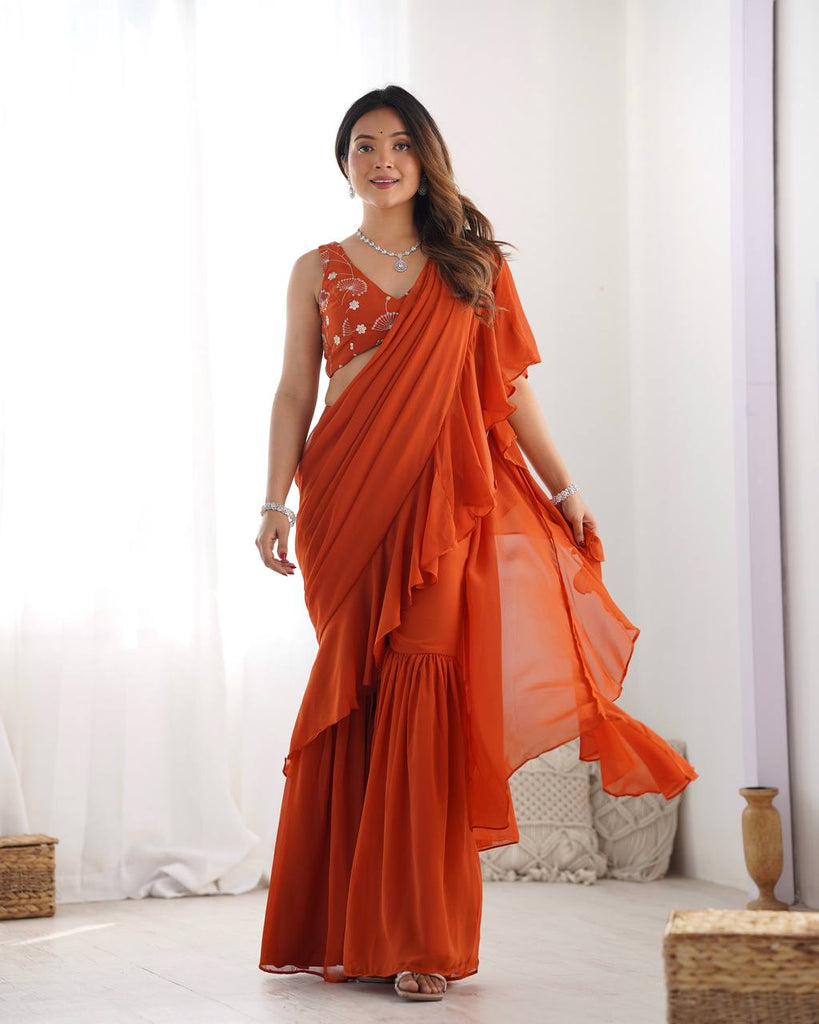
A kaftan dress succeeds when it looks intentionally fluid rather than simply oversized. The fabric should fall away from the body, the neckline should create structure near the face and any waist tie or side shaping should define proportion without removing comfort. In Indian occasion wear, prints, tassels, gota-style borders and silk textures can make a kaftan festive enough for weddings and family celebrations.
This guide explains how to evaluate a kaftan online, especially when it is described as free size. It covers shoulder fit, maximum chest guidance, length, arm opening, fabric weight and the styling decisions that turn one garment into distinct daytime, party and festive looks.
Shop the looks shown in this guide
Each photograph below comes from an active ClothsVilla product page and links directly to the matching item. Product availability, price and selectable options can change, so check the linked page before ordering.

A free-size Gaji silk kaftan with digital Bandhej print, gota-patti-style lace border and tassel details.

The side view shows fabric volume, sleeve opening and how the print continues across the loose silhouette.

A full-length view helps judge hem, border placement and overall ease.
What shoppers should know at a glance
- Primary topic: kaftan dress for women
- Best approach: compare fit, material, construction and complete styling—not only colour.
- Shop related products: Gowns for Women
- Also explore: New Arrivals and Best Selling Ethnic Wear.
Understand free size properly
Free size does not mean every body measurement will fit identically. Check the stated maximum chest or adjustment range, shoulder placement, garment length and arm opening. A kaftan may have generous body volume but still feel restrictive at the neck or upper arm.
Compare the maximum fit guidance with your actual measurement and the ease you prefer. If the garment adjusts to a stated limit, leave breathing room rather than treating that limit as the ideal fit.
- Check maximum chest guidance
- Measure shoulder and arm opening
- Allow comfortable ease
Use the neckline to create structure
Because the body is fluid, the neckline becomes an important anchor. V-necks lengthen the upper line, round necks feel classic and decorated necklines can replace a necklace. The border and tassel placement should sit cleanly rather than folding inward.
Choose innerwear that stays hidden and supports the neckline. If the neck is already decorated, use earrings and bangles instead of adding a competing necklace.
- Let the neckline anchor the look
- Coordinate innerwear
- Avoid jewellery crowding
Decide whether to define the waist
A tie, slim belt or side shaping can transform a kaftan from fully relaxed to occasion-ready. Waist definition is optional; it should follow the print and fabric. A belt placed over a central motif may interrupt the design.
Try the garment both loose and lightly shaped. For long events, a flexible tie often feels better than a rigid belt. Keep enough fabric ease for sitting and walking.
- Test loose and shaped versions
- Place belts away from key motifs
- Preserve sitting comfort
Style prints without visual overload
Bandhej and multicolour prints already supply rhythm and movement. Repeat one shade from the print in earrings, footwear or a bag rather than matching every colour. Metallic borders provide a natural jewellery direction.
For a wine base, antique gold, warm gold, green or neutral accessories can work. Keep the makeup palette coordinated with the garment’s warmth and the time of day.
- Repeat one print colour
- Follow the border metal
- Keep other patterns minimal
Choose footwear by length and venue
The kaftan hem should clear the floor with the selected footwear. Embellished flats create an easy festive look, block heels add height with stability and slim heels suit controlled indoor settings. Avoid shoes that catch in a wide hem.
Walk on a surface similar to the venue during your trial. If the dress is long, practise steps and stairs while holding only a small section of fabric, not bunching the whole side.
- Select shoes before alterations
- Test stairs and turns
- Avoid snag-prone embellishment
Create three occasion formulas
For a daytime festival, use lighter earrings, flats and a simple bag. For a wedding event, add structured jewellery, defined hair and polished footwear. For an evening party, emphasise the neckline, use a compact clutch and choose one reflective accessory.
The garment remains the same, but changing accessory scale alters the mood. This is why a strong kaftan can earn repeat wear across different types of functions.
- Day: light and practical
- Wedding: structured and ceremonial
- Evening: focused shine
Care for tassels, borders and silk texture
Tassels and lace borders can catch during wear and storage. Inspect them after the event, untwist gently and follow the product’s care instructions. Avoid placing heavy jewellery directly against delicate edges.
Store the kaftan with enough space for the fabric to breathe. Fold heavy borders with support and do not hang a weighty garment indefinitely if the shoulder can stretch.
- Inspect tassels after wear
- Protect decorative borders
- Store by fabric weight
A practical online shopping workflow
A useful online decision process is to shortlist two or three options, open every gallery image at full size and compare the same details in the same order: neckline or border, construction, fabric claim, included pieces, measurements, care and current availability. This prevents a striking hero photograph from carrying the entire decision. Save the product links and return to them after checking your event date, tailoring time and footwear.
Complete the look before the event
Before the event, complete a full trial under similar lighting. Wear the intended innerwear, jewellery and footwear; secure the drape or layers; sit for several minutes; raise the arms; walk on stairs; and take front, side and back phone photographs. These checks reveal proportion and comfort issues that a mirror can miss. Small corrections made early are usually more effective than adding more accessories at the last moment.
Build repeat value into occasion wear
After wearing the outfit, record what worked: the most comfortable closure, the jewellery scale that photographed well, the shoe height and any alteration needed for next time. That simple note makes repeat styling faster and supports better future purchases. Occasion wear delivers more value when it can be worn confidently again with a different blouse, drape, layer or accessory story.
Occasion-by-occasion outfit planning
An effective kaftan dress for women choice begins with the occasion rather than an isolated trend. Write down the dress code, venue, expected weather, event length and movement involved. Next choose the leading element—colour, silhouette, textile detail or jewellery. This sequence makes shopping more focused and prevents the final outfit from becoming visually crowded.
Festive house party
For a festive house party, build the kaftan dress look around printed fabric, earrings and embellished flats. Consider the venue, time of day and amount of walking or sitting before adding accessories. Photograph the complete outfit in daylight and indoor light; this reveals proportion, transparency and colour conflicts that a mirror can miss. Keep one visual focus, then let the remaining details support it.
Evening dinner
For a evening dinner, build the kaftan dress look around wine or emerald with a metallic bag. Consider the venue, time of day and amount of walking or sitting before adding accessories. Photograph the complete outfit in daylight and indoor light; this reveals proportion, transparency and colour conflicts that a mirror can miss. Keep one visual focus, then let the remaining details support it.
Mehendi function
For a mehendi function, build the kaftan dress look around a manageable hem with free-moving sleeves. Consider the venue, time of day and amount of walking or sitting before adding accessories. Photograph the complete outfit in daylight and indoor light; this reveals proportion, transparency and colour conflicts that a mirror can miss. Keep one visual focus, then let the remaining details support it.
Holiday gathering
For a holiday gathering, build the kaftan dress look around neat footwear and one elevated accessory. Consider the venue, time of day and amount of walking or sitting before adding accessories. Photograph the complete outfit in daylight and indoor light; this reveals proportion, transparency and colour conflicts that a mirror can miss. Keep one visual focus, then let the remaining details support it.
How to evaluate the product photographs
Open every product photograph at full size and examine flat width, sleeve construction, hem shape, side openings, adjustment ties and tassels. Compare the front, back, side and detail views with the written specifications. Studio lighting and screen settings can change apparent colour and shine, so the product title, material description, measurements and care notes should be considered together rather than relying on the hero photograph alone.
Look for consistency between images: seams should sit cleanly, decorative work should follow the described placement and the photographed fall should make sense for the stated fabric. If an accessory, blouse or layer is shown, verify whether it is included. Current stock and variant availability can change, so confirm these details on the linked ClothsVilla product page before ordering.
Fit and comfort checklist
Measure bust, hip, maximum adjustment and shoulder-to-hem length while wearing the innerwear planned for the occasion. Keep the tape level without pulling it tight, write the figures in both centimetres and inches, and compare them with the current product chart. A free-size label is not universal; confirm ease, side coverage and seated comfort.
If a measurement falls between sizes, consider the least flexible fitted area and the behaviour of the fabric. Non-stretch or closely cut sections usually need more ease. Leave sufficient time for tailoring when a component is unstitched or when a floor-length garment must be adjusted. A beautiful look succeeds only when it permits normal walking, sitting and arm movement.
Five common mistakes to avoid
- 1. Choosing from one bright studio image instead of comparing every angle and reading the colour description. Make the correction early so comfort and styling are not left to chance.
- 2. Using a familiar size label without checking bust, hip, maximum adjustment and shoulder-to-hem length. Make the correction early so comfort and styling are not left to chance.
- 3. Adding several statement accessories before deciding which garment detail should lead the look. Make the correction early so comfort and styling are not left to chance.
- 4. Trying the full outfit for the first time immediately before the event. Make the correction early so comfort and styling are not left to chance.
- 5. Ignoring care, alteration time or current availability shown on the linked product page. Make the correction early so comfort and styling are not left to chance.
Care and the final event-day review
Check how the fabric should be packed, steamed and cleaned before travel. Try the entire look with footwear, innerwear, jewellery and bag at least once. Walk, sit, raise both arms and check the outfit on a phone camera from several angles. Pack appropriate pins, a stain wipe and any fabric-specific care item. This short rehearsal protects the drape or silhouette and helps the styling remain intentional throughout the event.
Frequently asked questions
What does free-size kaftan mean?
It means the garment has a generous or adjustable fit, but you must still check the stated maximum measurement, length, neckline and arm opening.
Can a kaftan be worn to a wedding?
Yes. Choose an occasion fabric, festive print or border and use structured jewellery, hair and footwear.
Should I belt a kaftan?
Only if it improves proportion and does not interrupt the print. A flexible tie often feels more comfortable than a rigid belt.
Which jewellery suits a printed kaftan?
Follow one colour or metal already present in the print and border. Keep the rest controlled.
Are kaftans suitable for long events?
They can be very comfortable when the neckline, arm opening, length and fabric weight are right.
What should I check online?
Review maximum fit guidance, garment length, fabric, included details, care, gallery views and current availability.
Final takeaway
The strongest kaftan dress for women choice is the one that supports the event, fits securely, photographs clearly and remains comfortable in real movement. Use the linked product photographs as evidence, verify every current specification on the product page and build the outfit around one clear focal point. For more options, explore Gowns for Women and ClothsVilla’s latest ethnic wear.