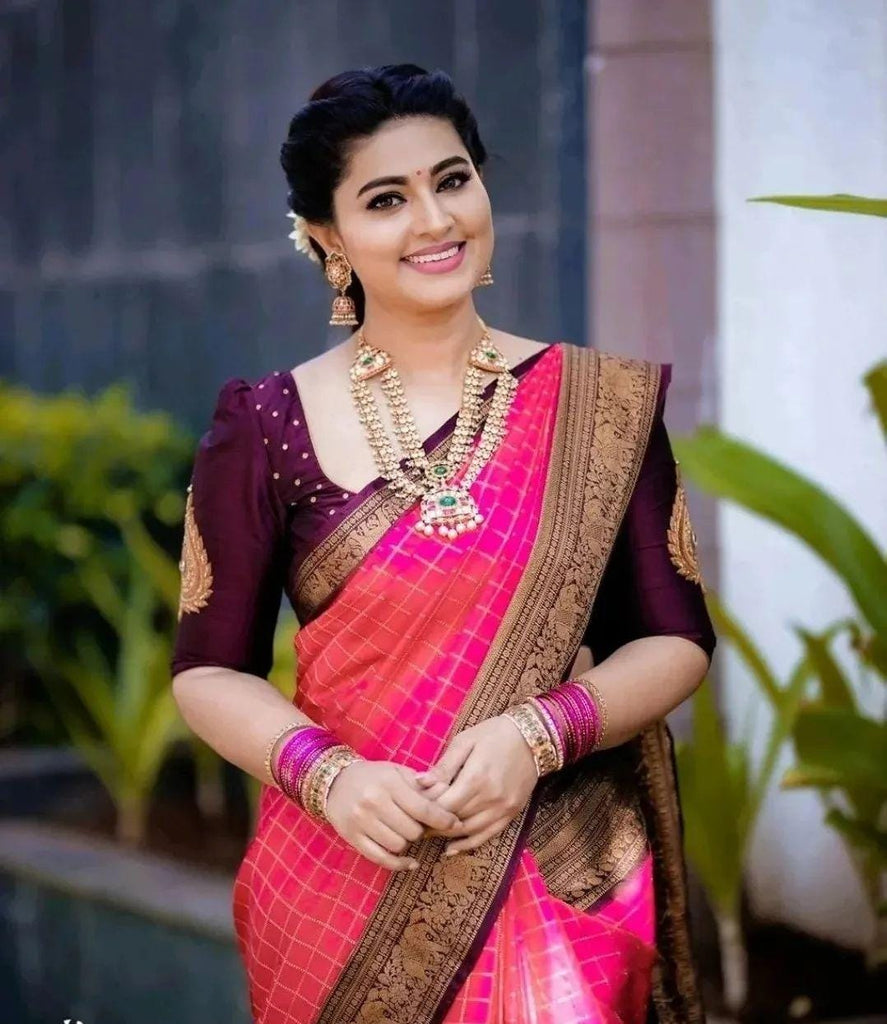
This guide explains how to style an organza dupatta with salwar suits, Anarkalis, palazzo sets, Farshi silhouettes and shararas for weddings and festivals. The recommendations focus on proportion, transparency, border weight, colour and movement rather than assuming that every organza dupatta behaves identically. For live shopping options, browse ClothsVilla salwar suits, designer dupattas and wedding suits.
What makes an organza dupatta different?
Organza is known for a crisp, sheer appearance. In outfit styling, that means it can create a visible line around the body without covering the kurta or blouse completely. A printed or embroidered organza dupatta can therefore act almost like a transparent frame: the suit remains visible through it while the border, motifs or surface work add a second layer of detail.
Not every product labelled organza has the same feel. Pure organza, organza silk, soft organza and tabby organza can differ in hand feel and stiffness. The right buying habit is to use the exact fabric language supplied in the current product description, not to infer weight from a photo. If the live listing names a separate dupatta fabric, treat that as the reliable reference.
Quick answer: the four easiest organza dupatta drapes
| Drape | Best for | Why it works |
|---|---|---|
| Single shoulder, open fall | Palazzo and Farshi suits | Keeps wide bottoms visible and creates a vertical line |
| One shoulder with opposite wrist hold | Sangeet and movement | Controls the fabric without bunching it at the neck |
| Front frame with two narrow falls | Anarkalis and straight suits | Shows the centre embroidery while adding symmetry |
| Shoulder-to-waist pin | Weddings and long events | Keeps a slippery or structured border secure |
1. Use transparency to show, not cover, the kurta
The biggest advantage of organza is that the outfit underneath remains visible. Do not defeat that advantage by folding the dupatta into a dense rope across the chest. If the kurta has a decorated neckline, embroidered panel or fitted bodice, let the dupatta fall slightly away from that area. A narrow shoulder fold is usually enough to control the fabric while preserving the design.
For a relatively plain suit, you can do the opposite: spread more of the dupatta across the upper body so the embroidery or print on the organza becomes the focal point. This gives you two distinct styling strategies from the same garment—show the suit when the kurta is detailed, or show the dupatta when the base is quieter.
2. Balance a crisp dupatta with the bottom silhouette
Wide-leg palazzos and Farshi bottoms already create volume below the waist. Add a stiff, fully spread dupatta on both shoulders and the outfit can become wide at every level. A diagonal or single-shoulder organza drape usually works better because it introduces direction. With a narrow pant or fitted churidar, you can afford to spread the dupatta more broadly.
For a detailed explanation of wide-leg proportions, see our party wear palazzo suit guide and Farshi salwar suit guide.
10 live ClothsVilla looks with organza dupatta styling potential
These examples use live ClothsVilla product imagery and link directly to the matching product. Product details should always be checked on the current product page before ordering.


3. Match border weight to the drape
A wide lace, gota or embroidered border changes how an organza dupatta falls. Heavier borders pull the edge downward, which can be useful for a clean shoulder drop but uncomfortable when gathered tightly at the neck. If the border is substantial, pin the dupatta at one structural point—usually the shoulder—and allow gravity to do the rest.
With a fine or lightly finished edge, you have more freedom to gather, pleat or wrap the dupatta. The lighter the border, the easier it is to create a narrow front frame or cross-body drape. Avoid making tiny repeated folds in a heavily bordered organza because the stacked edge becomes bulky very quickly.
4. Tonal versus contrast organza dupatta
Tonal styling
A dupatta in the same colour family as the suit creates a lengthening, composed effect. It is especially useful when the outfit already includes strong embroidery or print. White-on-white, maroon-on-maroon and purple-on-purple can look sophisticated when texture provides the contrast.
Contrast styling
A contrasting organza dupatta works best when the base suit is relatively simple or when the contrast colour already appears in embroidery. Repeat the contrast once elsewhere—in bangles, a bag, lipstick or jewellery stones—so it feels intentional. Do not add several unrelated accent colours just because the dupatta is sheer.
5. Organza dupatta styling by occasion
Day wedding: use a loose shoulder fall with pastel, white, peach, yellow or sky-blue outfits. Natural light already reveals the texture, so jewellery can be lighter. Sangeet: secure the dupatta at the shoulder and either the waist or wrist so you can dance. Reception: use a longer open fall with deeper colours, a clean neckline and more defined earrings. Festival or puja: choose a drape that leaves your hands free and does not trail near lamps, food or crowded seating.
For more occasion planning, compare our day wedding guest outfit guide and Sangeet outfit ideas.
6. Jewellery that works with organza
Organza already adds visible texture around the neckline and shoulders. Before adding a necklace, look at where the dupatta will sit. If the border passes near the collarbone, statement earrings can be cleaner than a necklace trapped beneath the fabric. If the neckline is open and the dupatta falls away from it, a choker or short necklace can fill the space.
Pearls work well with soft pastels and white because they echo the light, airy quality without adding another hard texture. Kundan or gold-tone jewellery can warm maroon, red, yellow and green. Silver-tone or crystal pieces suit cooler blue, purple and black outfits. The exact choice is stylistic; balance is more important than matching a jewellery metal to a fabric rule.
7. How to pin organza without damaging the look
Use the minimum number of pins necessary. Place a pin where there is enough fabric or a border to distribute tension. A single shoulder pin often solves most movement problems. If you need a second point, secure it at the waist or side seam area rather than peppering the visible front with pins. Hidden small safety pins can be more useful than decorative pins when the outfit already has substantial work.
Test the drape before the event by sitting, raising your arms and walking. A dupatta that looks perfect while standing still may pull at the shoulder after movement. Adjust the pin position rather than tightening the fabric.
8. Organza dupatta with an Anarkali
An Anarkali already has a strong vertical-to-flared silhouette. The safest organza treatment is to preserve the centre line of the gown. Place the dupatta on one shoulder or create two narrow front falls. Avoid wrapping a wide, stiff layer around the natural waist if the Anarkali’s flare begins there; it can interrupt the shape.
Floral Anarkalis deserve extra breathing room because print and transparency can overlap visually. Our Floral Anarkali Suit Trends 2026 guide explains print scale, flare and occasion styling in more depth.
9. Organza dupatta with palazzo and Farshi sets
With wide bottoms, think vertical. A shoulder fall that ends near the knee or below creates a clean line through the width of the trousers. If you drape across the front, keep the fold narrow enough that the waist and upper palazzo remain visible. A wide spread can make the outfit look visually heavier than it feels.
For dancing, the opposite-wrist technique works well: pin one end at the shoulder and lightly hold or loop the other end at the wrist. It controls the organza while retaining movement. Do not knot delicate embroidery tightly around the wrist; the goal is temporary control, not tension.
10. Hair, makeup and bags
When the dupatta has a decorative edge near the face, a sleek bun or low ponytail can keep the border visible. Soft waves work when the dupatta stays mainly behind the shoulder. For makeup, choose one focal area: defined eyes with a softer lip for evening, or fresher skin and lighter eye definition for daytime.
A compact potli or clutch is easier than a large shoulder bag because bag straps can crush or displace organza at the shoulder. If the dupatta border is already embellished, a simpler bag usually gives a cleaner finish.
Common organza dupatta mistakes
- Folding it too many times: organza volume stacks quickly.
- Pinning through the most visible motif: use a border or less conspicuous area when possible.
- Covering the entire embroidered kurta: use transparency strategically instead.
- Ignoring border weight: a heavy edge changes how the fabric hangs.
- Using a large shoulder bag: the strap can crease and shift the dupatta.
- Assuming all organza is equally stiff: check the actual product fabric description.
Buying checklist for an organza dupatta suit
Confirm whether the dupatta is included, then read its fabric and work separately from the top and bottom. Check the listed dupatta length where available, because longer lengths allow more draping options. Note border type, embroidery density and whether the suit itself is stitched. If measurements or material details are important and not provided, avoid assuming them from imagery.
Also consider rewear potential. A tonal organza dupatta can often move between several outfits in the same colour family, while a heavily printed or contrast design may be more statement-specific. The best purchase is the one you can style for more than one event.
Frequently asked questions
Is organza dupatta good for weddings?
Yes. Its sheer, structured appearance can make suits and Anarkalis feel more formal without fully covering embroidery or print.
How do I stop an organza dupatta from looking bulky?
Use fewer folds, keep the shoulder section narrow and avoid wrapping it repeatedly around the neck. Let one end fall openly whenever practical.
Can I wear an organza dupatta with a palazzo suit?
Yes. A single-shoulder or diagonal drape works especially well because it preserves the wide-leg silhouette.
What jewellery suits an organza dupatta?
Choose jewellery according to the neckline and dupatta border. If the border sits near the neck, statement earrings may be cleaner than adding a heavy necklace.
How should I style an organza dupatta for a sangeet?
Secure it at one shoulder and a second practical point such as the waist or wrist so it stays controlled while dancing.
Can organza dupatta be worn for daytime functions?
Yes. Pastel, white, yellow, peach and blue organza looks can feel light in natural light, especially with restrained jewellery.
Should my organza dupatta match my suit exactly?
No. Tonal matching creates a cohesive look, while contrast can work when the accent colour is repeated intentionally elsewhere in the outfit.
Final takeaway
The easiest way to style an organza dupatta is to let its transparency do the work. Keep the drape clean, respect the border weight, show enough of the outfit underneath, and secure only the points needed for your event. Whether you wear it with a Farshi suit, floral Anarkali, palazzo or sharara, the best result is structured but not stiff.
Continue shopping through designer dupattas, salwar suits, Indian dresses and new arrivals.