A Diwali lehenga has to look festive while remaining practical around stairs, family gatherings, dinner tables and lamps. The skirt gets the visual attention, but the real success of the outfit depends on the choli fit, hem length, dupatta control and whether the embellishment feels comfortable after several hours.
For 2026, lighter movement and concentrated detail are more useful than treating every festive lehenga like bridal wear. Georgette, silk and thoughtfully placed zari or sequins can create enough evening impact without making the outfit difficult to wear.
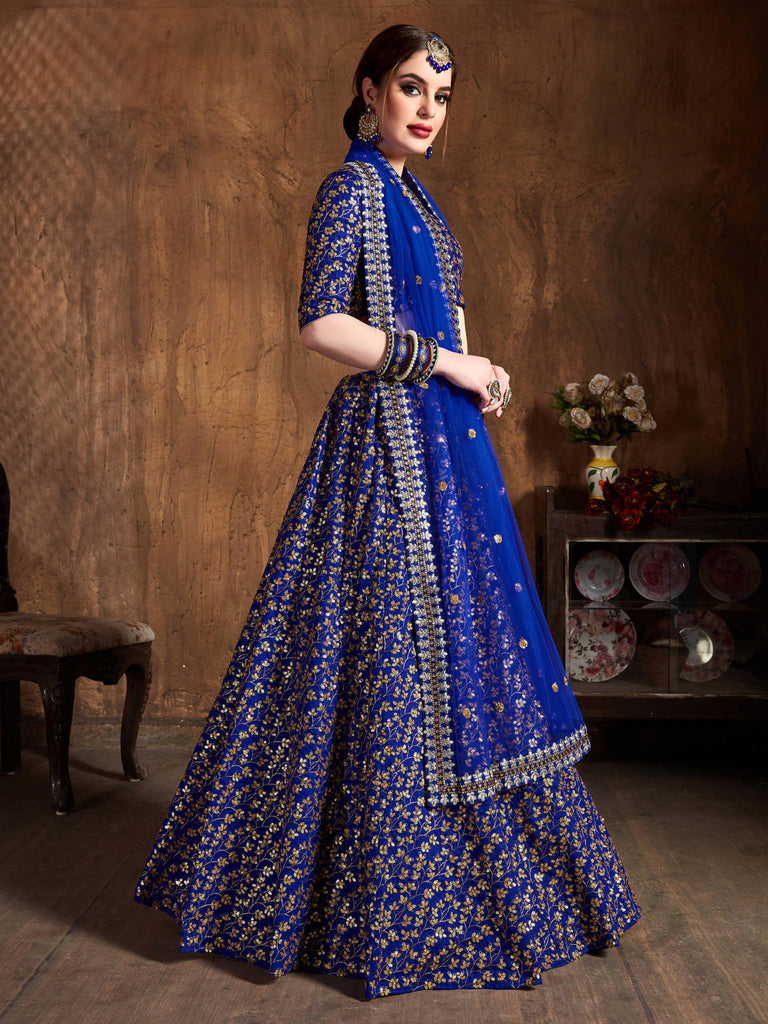
Blue georgette: let the fabric move
Georgette works well for an evening lehenga because it can create flow without the stiffness of very structured textiles. Blue also gives a cooler alternative to classic red and maroon.

Zari + sequins: control the rest of the shine
When both zari and sequins are present, the textile already supplies plenty of reflection. Use jewellery with shape and craftsmanship rather than another layer of glitter.

Choli fit should survive arm movement
Raise both arms, reach forward and turn during the fitting. The blouse should stay in place without cutting at the armhole or riding dramatically upward. A secure choli makes every dupatta drape easier.

Blue pairs easily with both gold and silver
Choose gold for a warmer traditional direction or silver for a cooler contemporary one. Avoid using both metals heavily unless the garment itself already mixes them.

Purple Kasturi silk creates a richer textile story
Silk brings body and texture. A purple base works particularly well for evening Diwali events because it maintains depth under warm lighting.

Multi-thread work supports colourful accessories
When embroidery contains several tones, choose one secondary colour for the earrings or bag. This creates a deliberate connection without matching the entire outfit exactly.

Dupatta width changes how much blouse detail remains visible
A wide front drape can cover the choli work; a narrow one-shoulder drape reveals more. Decide which textile should be the hero before pinning the dupatta.

Keep tassels controlled around lamps
Long tassels and loose dupattas should be secured before lighting diyas. Do not lean over flames. Fire safety is more important than maintaining a dramatic open drape.

Hem length should be checked with real footwear
Put on the exact juttis, sandals or heels before finalizing the skirt length. Walk quickly, turn and climb stairs. The lehenga should clear the shoe without being held up by hand.
Choose neckline according to jewellery
Square and scoop necks suit shorter necklaces. V-necks can carry a pendant. High or heavily embroidered necklines usually look better with statement earrings and no necklace.
Sleeves and bangles need visual space
Elbow sleeves can carry embroidery but reduce space for large bangle stacks. Sleeveless and short sleeves allow more wrist styling. Plan them together.
Use one hero source of sparkle
If sequins are strong, use matte footwear and a simple bag. If the lehenga is quieter, jewellery can provide the light-catching detail. This hierarchy keeps the outfit elegant.
Daytime lehenga styling
Use lighter jewellery, softer makeup and a neatly pinned dupatta. Even a rich lehenga can feel appropriate before sunset when the styling is controlled.
Nighttime lehenga styling
Deepen the lip, change earrings, add a bangle stack or switch the bag. You do not need a second outfit to create a night look.
Rewear the components separately
The skirt can work with another top, the choli with a saree, and the dupatta with a suit. A Diwali lehenga becomes better value when its pieces can leave the original set.
Browse ClothsVilla’s lehenga choli, party lehengas and festive wear for more directions.
FAQs
Which lehenga fabric is good for Diwali?
Georgette offers movement, while silk gives more structure and richness. Choose according to your comfort and the event.
Can I wear a blue lehenga for Diwali?
Yes. Blue works beautifully with gold, silver, wine, pink and cream accents.
How should I pin a Diwali dupatta?
Use secure anchor points at the shoulder and, where suitable, waist. Keep loose fabric far away from open flames.
Should a Diwali lehenga be heavily embellished?
No. Colour, texture, flare and selective work can create festive impact without bridal-level weight.
How do I rewear a lehenga after Diwali?
Separate the skirt, choli and dupatta and combine them with simpler pieces already in your wardrobe.
Editorial note: Featured ClothsVilla products were active and fully inventory-untracked when selected. Verify live product details before ordering.