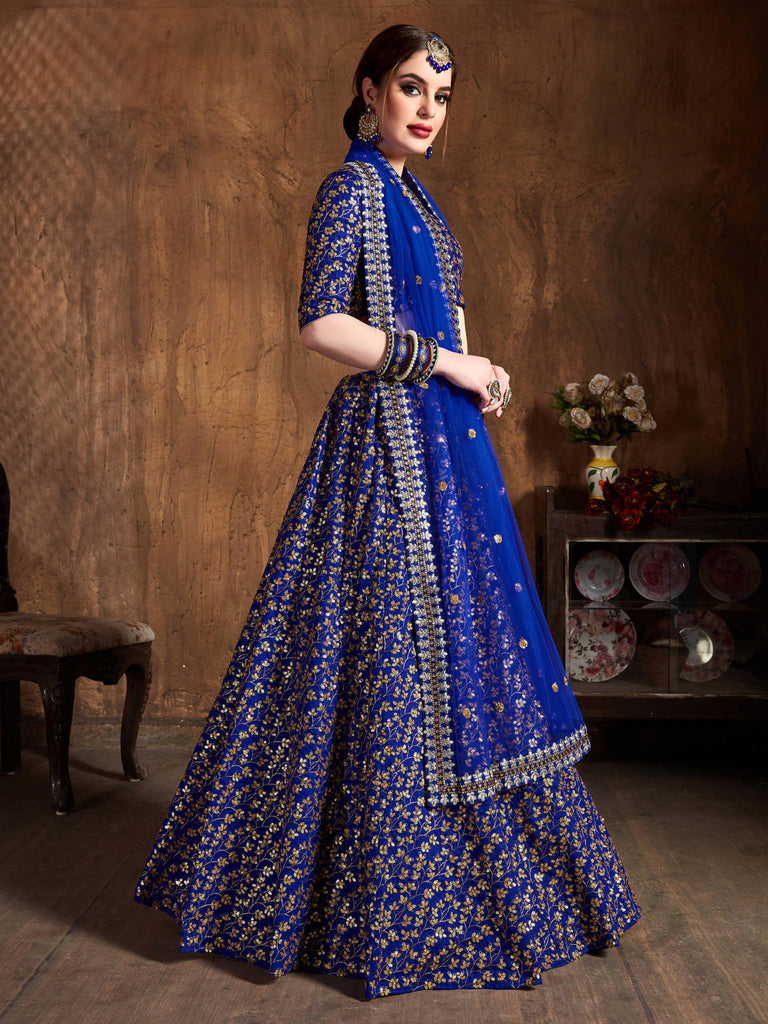
A lehenga can be an excellent Karwa Chauth choice for women who want a festive silhouette without managing saree pleats. The skirt gives movement, the choli defines the upper body, and the dupatta can carry the traditional drape. The practical challenge is to keep the waistband comfortable and the dupatta secure through puja and moonrise.
Cream and white create a canvas for red accessories
A pale lehenga can become Karwa Chauth-ready through a red or maroon dupatta, traditional bangles, bindi and gold jewellery. Check family customs first, then use contrast to create the occasion cue.

Beads can replace a heavy necklace
If the choli already carries bead detail near the neckline, choose earrings and bangles instead of another dense layer. This makes the upper body cleaner and more comfortable.

Tissue and sequins suit the evening portion
Reflective fabric can look dramatic after sunset. If you plan a daytime outfit change, reserve this kind of lehenga for the final hours rather than wearing it through the full fasting day.

Semi-stitched pieces need alteration time
Do not order too close to the festival if tailoring is required. Build in enough time for waist, choli and length adjustments, then test the finished garment while sitting and walking.

Use the dupatta to introduce traditional colour
If the base is white, a red, maroon or pink dupatta immediately changes the mood. Pin one shoulder and a second point if needed so the drape does not interfere with rituals.

Dark florals are an optional modern direction
Some families avoid black for Karwa Chauth, so follow your customs. Where it is acceptable, dark floral prints can create an evening-focused look with red and gold accents.

Wedding-ready lehengas need edited Karwa Chauth jewellery
If a lehenga is already rich enough for a wedding, simplify the necklace and let traditional bangles, bindi and a statement earring connect it to Karwa Chauth.

Heritage borders add tradition without full red
A Paithani-inspired border or other woven traditional detail can give the outfit cultural depth. Pair it with classic jewellery and a restrained choli.

Keep sequin looks comfortable at contact points
Check the underarm, waist and neckline for scratchy work. Decorative surfaces are easiest to wear when the areas that touch the body remain smooth.
Choli fit matters more than trend
A backless, high-neck or sweetheart choli can all work, but the best design is the one that stays in place when you raise your arms and sit. Fit is especially important on a long fasting day.
Use bangles as the dominant jewellery zone
Karwa Chauth naturally emphasizes the hands. If your bangle stack is elaborate, keep rings and bracelets minimal and choose a necklace scale that does not compete.
Test skirt length with footwear
Wear the exact heels or flats while checking the hem. A skirt that drags becomes tiring and risky when moving between rooms or outdoor moonrise areas.
Rewear the choli separately
A festive choli can work later with a saree or simpler skirt. This is one of the easiest ways to increase the value of a lehenga purchase.
Browse ClothsVilla’s lehenga choli and festive lehengas.
FAQs
Can I wear a cream lehenga for Karwa Chauth?
Yes, subject to family customs. Use red, maroon, pink or gold accessories to make the styling feel more occasion-specific.
Is a semi-stitched lehenga a good option?
Yes if you have enough tailoring time and can verify the final fit before the festival.
How should I pin the dupatta?
Secure the shoulder and, where suitable, a second point near the waist so both hands remain free.
Which jewellery works with sequins?
Use fewer reflective pieces and choose jewellery with strong shape rather than maximum sparkle.
Can I rewear a Karwa Chauth lehenga?
Yes. Restyle the skirt, choli and dupatta separately for weddings, Diwali and other celebrations.
Editorial note: Products were active, inventory-untracked ClothsVilla listings at selection time.