Browse the Lehenga Choli collection, explore New Arrivals, and use our complete lehenga buying guide for general fit and fabric advice.
Pista Green Lehenga: Soft, Fresh and Wedding-Friendly
Pista sits between pastel and traditional festive green. It is light enough for day events but still unmistakably celebratory. Organza is especially effective in pista because the fabric’s structure lets multicolour thread, zarkan and sequin details remain visible. Pair it with pearl, kundan, soft gold or emerald accents depending on the work.
For mehendi or an outdoor engagement, pista works well with floral jewellery or fresh flowers, but it does not need to be styled only as a daytime colour. Under evening lighting, a pista lehenga with reflective embroidery can look surprisingly luminous.
Sea Green and Aqua: Cool, Airy Alternatives
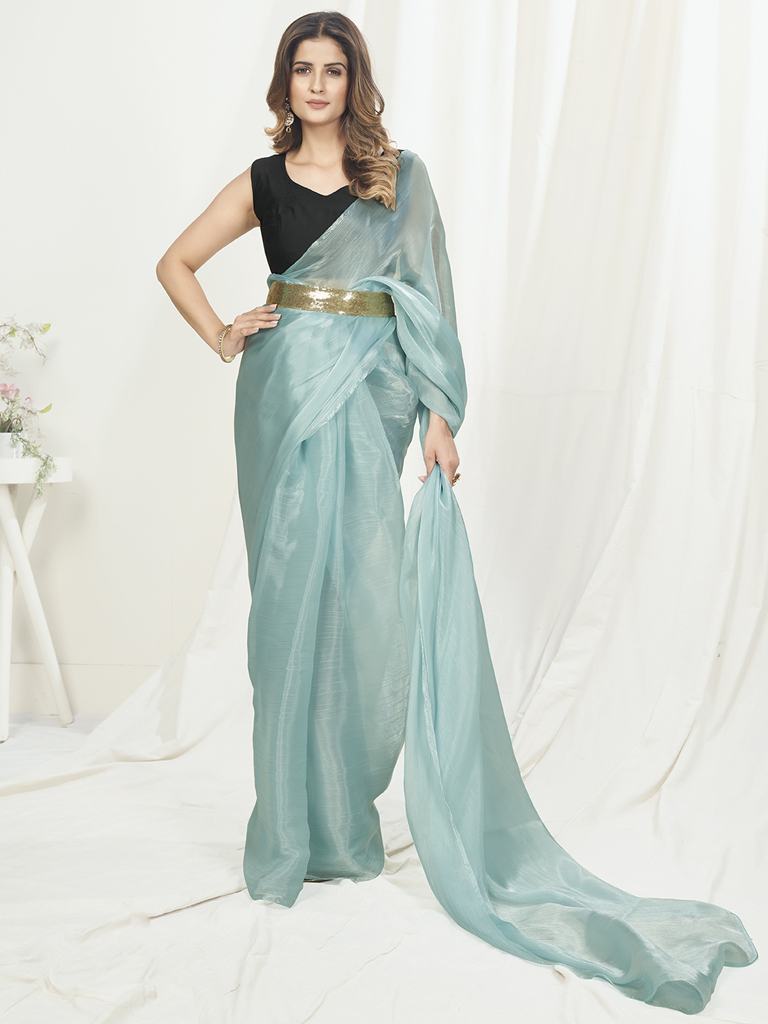
Sea green introduces more blue into the palette. It feels cool and polished, making it a strong option for destination weddings, poolside functions and modern engagement décor. Silver, diamond-style jewellery and pearls are natural partners, while warm gold can create deliberate contrast.
If you are coordinating with pastel florals, sea green is easy to combine with lavender, blush, ivory and powder blue. It also photographs well against sandstone, neutral interiors and greenery because it is distinct without becoming visually aggressive.
Lime Green: High-Energy Festive Dressing
Lime is brighter and more playful than pista. It is ideal when you want the outfit to feel energetic for mehendi, haldi-adjacent functions, Garba or sangeet. Because the colour itself is strong, you can reduce jewellery density. Mirror work, sequins and multicolour thread can reinforce the festive mood without requiring a very dark border.
Balance lime with neutral makeup and either warm gold or fresh floral accessories. Avoid adding too many competing neon colours unless the event theme specifically calls for a maximalist palette.
Emerald and Deep Green: A More Regal Direction
Emerald or dark green has the formality of wine and navy while retaining the cultural association of green. It pairs exceptionally well with antique gold, polki and kundan. For evening weddings, a deep green lehenga with gold zari or beadwork can look rich without following the standard red-maroon route.
If the fabric is velvet or heavy silk, deep green becomes more winter-oriented. In georgette, net or organza it can remain versatile in warmer climates. Always judge total fabric weight rather than colour when planning comfort.
Green Lehenga Jewellery and Makeup
Gold is the most traditional jewellery direction, but it is not the only one. Pista and sea green can look clean with pearls or diamond-style stones. Emerald-on-green creates tonal richness if the stones are darker than the fabric. Ruby or pink accents create complementary contrast and can connect with multicolour embroidery.
For makeup, peach and rose tones prevent green from making the complexion look too cool. Brown or bronze eyes are easy to wear; emerald eyeliner can be used sparingly if you want a colour echo. Keep the lip distinct from the outfit—rose, terracotta, nude-brown and berry can all work depending on the shade of green.
Blouse and Dupatta Colour Combinations
A same-colour blouse creates length and continuity. For light green, ivory, champagne or a deeper tonal green blouse can add structure. For deep green, antique gold or a lighter sage/pista contrast can modernize the look. If the skirt includes pink, blue or gold thread, repeating one of those colours in blouse piping or jewellery can make the palette feel intentional.
A dupatta can either continue the green story or introduce contrast. Pista with ivory, sea green with powder blue, lime with pink, and emerald with antique gold are useful starting points. Keep border weight proportionate to the skirt.
HOP Green Styles to Use as Visual References
The following HOP images are linked to their ClothsVilla product pages. Use them to study colour, embroidery, flare and fabric, while checking the linked page for current variant and availability status.


How to Shop Green Lehengas More Intelligently
For green lehengas, search by shade family as well as by fabric. The words pista, lime, sea green, rama, aqua and teal can overlap visually depending on the supplier. Read the variant name, but rely on the photograph and embroidery tones to plan accessories. If you need a particular family colour for a coordinated event, compare the product image on more than one screen and avoid promising an exact match to another garment made from a different fabric.
Before ordering, compare the fabric, blouse construction, waist allowance, lehenga length, dupatta fabric and embroidery. Semi-stitched pieces need alteration planning. If a product page changes after this guide is published, the live product page is the current source for pricing, variant and availability information.
Blouse, Dupatta and Jewellery Balance
Green is versatile enough to support either tonal or contrasting styling. Decide early whether you want a monochrome green look or a multi-colour festive look. In a monochrome outfit, texture and metal become important for depth. In a multicolour look, repeat only one or two accent shades so the result remains coherent.
If the lehenga skirt is the hero, keep the blouse neckline and jewellery cleaner. If the blouse is highly detailed, let the dupatta frame it rather than covering it. When the skirt and blouse are both heavily worked, a single neck piece plus earrings is often more polished than stacking every accessory.
Photography, Lighting and Real-World Green
Outdoor greenery can make some green outfits blend into the background. If your venue is a garden, choose a shade that separates from foliage—pista against dark leaves or emerald against pale stone, for example. Sea green can shift bluer in shade, while lime becomes more yellow under warm lights.
Online product photography is useful, but screen brightness and fabric sheen change perceived colour. Organza may reflect light more strongly, net can reveal the lining, and georgette usually reads softer. When coordinating family outfits, match a green family rather than expecting separate textiles to be identical.
Comfort for Mehendi, Sangeet and Long Functions
- Check waist security before dancing.
- Keep the finished hem clear of footwear.
- Use a soft lining under sequin, mirror or zarkan work.
- Secure the dupatta so the arms remain free.
- Test sitting, walking and dancing before the event.
- Carry safety pins, fashion tape and a spare hook.
Green is popular for mehendi and sangeet, both movement-heavy functions. Prioritize a secure waistband, manageable flare and dupatta drape that leaves the arms free. A lighter georgette or organza design can be easier to carry than a densely layered net piece if you plan to dance.
How to Coordinate Green with Wedding Décor and Family Outfits
Green is unusually sensitive to its surroundings because wedding venues often already contain foliage, floral installations and coloured lighting. For a garden ceremony, a pista or sea-green lehenga can stand out against darker plants, while emerald may need gold embroidery or a contrasting dupatta to separate clearly from the background. At an indoor venue with warm peach, marigold or red décor, green becomes a complementary colour and can look especially festive. If the family is wearing coordinated colours, do not insist on exact green matches across silk, net, organza and georgette. Choose a shared family—soft greens, jewel greens or blue-greens—and let fabric texture create natural variation.
Couple coordination also works best through accents rather than identical fabric. A groom wearing ivory can repeat the green through a pocket square, stole or safa. If the groom wears deep green, the lehenga can move lighter into pista or sea green. This creates connection without making the pair look like a uniform. For bridesmaids, alternating pista, aqua and lavender can create a soft palette around a central emerald bridal look.
Rewearing a Green Lehenga After the Wedding
A green lehenga is easier to restyle than many highly specific bridal colours. Reuse a pista skirt with an ivory crop blouse for a daytime celebration, pair an emerald skirt with a gold blouse for Diwali, or style a lime skirt with a simpler choli and lighter dupatta for Navratri. The blouse can also be reused with a saree if its neckline and sleeves are versatile. When ordering or tailoring, think about future combinations before choosing an extremely specific blouse shape or a very heavy fixed dupatta treatment.
Common Styling Mistakes to Avoid
Do not call every light green pista when coordinating outfits. Pista, lime and sea green have noticeably different undertones and may clash if placed side by side.
Do not add green jewellery automatically. Sometimes a contrasting ruby, pearl or gold direction frames the outfit more effectively.
Do not overlook the venue background. A green outfit photographed in dense greenery needs enough contrast in embroidery, jewellery or shade to remain visually defined.
Care and Storage
Air an embellished lehenga after the event before storage. Keep perfume away from embroidery and place soft tissue or cotton between worked panels so sequins, stones and zari do not rub. Heavy skirts may be safer stored horizontally rather than hanging from the waistband. Follow product-specific cleaning instructions.
Frequently Asked Questions
Is pista green lehenga good for a day wedding?
Yes. Pista is one of the most versatile day-wedding greens because it is soft, fresh and easy to pair with pearls, kundan and gold.
What jewellery goes with sea green lehenga?
Pearls, diamond-style stones, silver-toned pieces and soft gold all work. Choose based on the embroidery metal and your desired contrast.
Can I wear dark green to a reception?
Absolutely. Deep green can look formal with antique gold, polki, kundan or champagne-tone jewellery.
Which green is best for mehendi?
Lime, pista and brighter leafy greens are popular because they feel energetic and festive, but choose the shade that flatters you and suits the décor.
What colour dupatta works with green lehenga?
Ivory, blush, pink, gold, powder blue or a tonal green can all work. Repeat a colour already present in the embroidery when possible.
Final Styling Takeaway
The strength of a green lehenga is its range. Pista can be gentle, sea green cool, lime playful and emerald regal. Choose the shade according to light, venue and occasion, then let fabric and embroidery define the level of formality. With a controlled jewellery palette and a comfortable drape, green can carry you from mehendi to reception without ever feeling like a one-note colour.
For related reading, see our pastel day-wedding guide and organza lehenga guide.