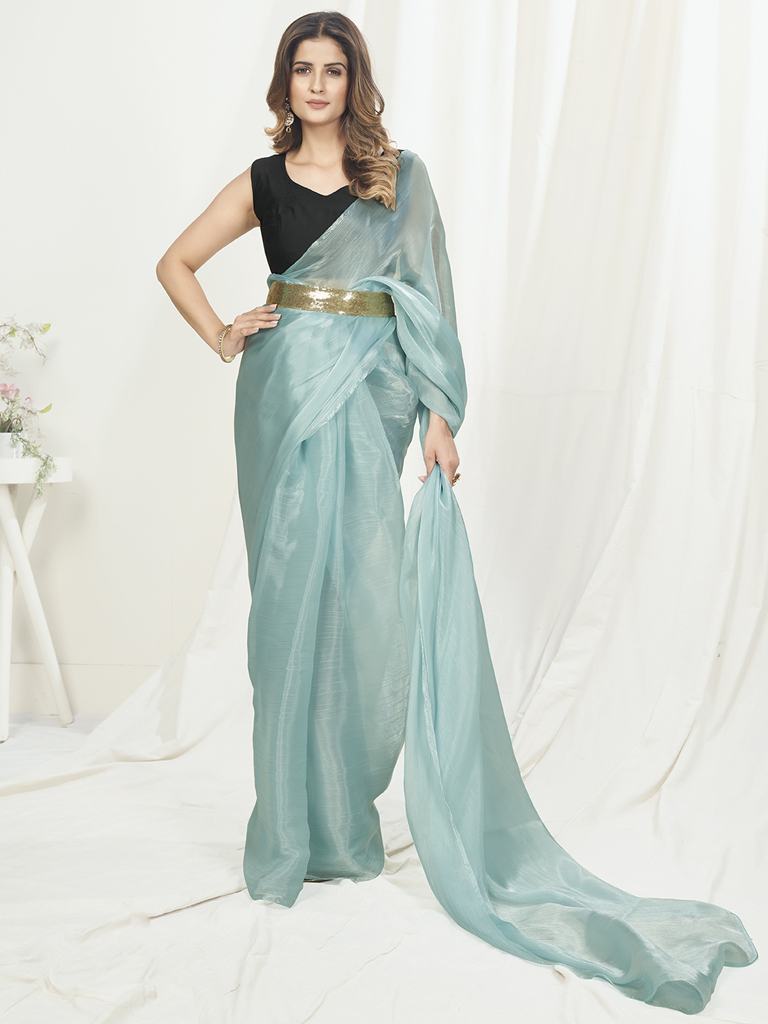
This guide explains how to understand the handloom saree revival without reducing every woven saree to one category. We will look at Katan, Kanjivaram and Banarasi-inspired options, how to judge colour and border proportions, what blouse shapes feel current, how to style handloom sarees for weddings and festivals, and how to buy online with more confidence. The goal is not to chase a trend for one season. It is to choose a saree whose textile character gives you many years of styling possibilities.
Why handloom sarees feel especially relevant in 2026
The strongest fashion shifts usually happen when two desires meet. Right now many shoppers want celebration clothes that still feel personal, and they are increasingly interested in pieces that can be reworn rather than photographed once and forgotten. A woven saree answers both needs. It carries pattern and richness in the textile itself, so it can look complete with restrained jewellery. It can also be restyled with different blouses, belts, jackets, jewellery families and drapes. That flexibility makes heritage sarees fit naturally into the wider movement toward quieter luxury, thoughtful wardrobes and craft-led dressing.
There is also a visual reason for the revival. Woven checks, small buttas, contrast borders and textured pallus photograph differently from flat all-over embroidery. They create detail that reveals itself as the wearer moves. Under daylight, the weave becomes visible; under evening lights, metallic threads or silk surfaces catch highlights. A well-chosen handloom saree can therefore feel sophisticated in candid photographs without requiring a heavily embellished blouse.
Katan silk: smooth structure with a polished finish
Katan is associated with a smooth, strong silk construction and a refined surface that can carry woven motifs beautifully. For a modern wardrobe, a Katan-style handloom saree works well when you want richness without excessive bulk. Pink, black, jewel tones and classic reds can all be transformed by blouse colour. A tonal blouse gives the saree a long, uninterrupted line; antique gold makes it more ceremonial; velvet can deepen the look for winter; and a crisp contrast blouse can make the same saree feel younger.

If you are choosing a Katan saree online, pay attention to the width and visual weight of the border. A broad border can look regal on a tall frame but can also be styled beautifully on a petite wearer when the pleats are neat and the blouse is not visually heavy. A smaller border creates an easier day-to-evening saree. The right choice is less about rigid height rules and more about the overall proportion you want in photographs.
Kanjivaram: colour, contrast and architectural borders
Kanjivaram sarees remain relevant because they have a graphic quality that modern styling can amplify. Contrast borders, temple-inspired geometry, checks and rich silk colour give the saree an architectural feel. Instead of pairing a Kanjivaram only with a matching traditional blouse, try thinking in colour relationships. Lilac with antique gold, black with jewel-toned stones, deep green with maroon, or blue with a muted metallic can all create a fresh result while respecting the textile.

For weddings, a Kanjivaram can carry the entire look. That means you do not need to add a heavy necklace, large earrings, stacked bangles, waist belt and hair ornament all at once. Decide which element should lead. If the pallu is dramatic, use a cleaner blouse and one strong jewellery piece. If the saree is comparatively restrained, the blouse can carry embroidery or an interesting neckline.
Banarasi and Banarasi-inspired handloom sarees
Banarasi sarees are loved for woven motifs, zari and a ceremonial sense of richness. In 2026, the most modern way to wear them is often the simplest: excellent drape, carefully fitted blouse and jewellery that leaves breathing room around the textile. White and cream Banarasi-inspired sarees can feel almost minimalist when paired with pearls or antique gold. Green, purple and jewel colours can lean more traditional without becoming visually overloaded.

When shopping online, read the product description closely instead of relying only on words such as “Banarasi look.” Check the stated fabric composition, whether the blouse piece is included, whether the product is described as handloom or woven, and what kind of work is actually present. Terms such as pure silk, handloom and handcrafted have specific implications, so choose based on the information the product page actually provides rather than assuming more than is stated.
How to choose a handloom saree for a wedding
Start with the role you are playing. A bride, sister of the bride, close family member and general wedding guest may all want different levels of visual intensity. A guest can choose a strong silk colour with restrained jewellery; a close family member might add a more elaborate blouse or heirloom necklace. Then consider the event time. Daylight reveals weave and colour nuance beautifully, while evening light can make zari and deep tones feel richer.
Next think about movement. If you will be sitting through a long ceremony, greeting relatives and walking between venues, a secure pleat structure matters. Choose footwear before the final drape, pin the waist pleats discreetly, and place a shoulder pin where it supports the pallu without crushing the border. The most expensive saree can look unsettled if the drape needs constant adjustment; a calmer saree can look luxurious when it moves naturally.
The 2026 blouse direction: cleaner, sharper, more intentional
One of the easiest ways to modernise a heritage saree is through blouse architecture rather than excessive surface work. Square necks, sculpted sweetheart shapes, high boat necks, elbow sleeves, simple sleeveless cuts and corset-influenced structures can all work when the tailoring suits the wearer and the saree. The common thread is precision. A clean neckline and stable shoulder line make the woven saree look more deliberate.
Contrast blouses are still useful, but the contrast does not always have to be loud. A dusty rose blouse with a pink saree creates tonal depth. Olive with antique gold feels sophisticated. Black with lilac or jewel tones creates evening drama. Ivory can calm a multicolour weave. If the saree already has a very strong border, repeat one minor border colour in the blouse instead of introducing a completely unrelated shade.
Jewellery: let the textile decide
Gold remains a natural partner for many handloom silks, but the 2026 mood is less about automatically wearing every gold piece you own. Temple-inspired jewellery can make a Kanjivaram feel ceremonial. Pearls can soften a Banarasi saree for a morning function. Polki-style pieces can create wedding richness, while a single sculptural earring can make a handloom saree feel contemporary. The blouse neckline should determine whether you need a necklace at all.
Another useful method is to repeat only one visual language. If the saree uses warm zari, keep bag hardware and jewellery in related warm tones. If the saree is cool lilac or black and the border supports it, silver-toned or diamond-like jewellery can work. Mixing many metals is possible, but it requires confidence; for most occasions, one coherent metal family looks more polished.
Hair, makeup and flowers
Textile-led dressing benefits from beauty choices that frame the face rather than compete with the saree. A low bun with jasmine or another appropriate flower creates an unmistakably traditional line. Sleek centre-parted hair looks clean and editorial. Soft waves can make a heavy silk feel less formal for a reception. For makeup, choose one primary focus: defined eyes with a muted lip, or fresher eyes with a stronger berry, brick or red lip.
Do not assume every silk saree requires heavy makeup. In daylight, skin texture, a neat brow, kohl and a lip colour with enough contrast may be sufficient. At night, slightly stronger eye definition helps the face remain visible next to deep colours and metallic zari. Always test makeup beside the actual blouse and jewellery rather than planning each component separately.
Handloom sarees for festivals
For Diwali, Navratri gatherings, pujas, Onam celebrations, family functions and festive dinners, a handloom saree can be styled less formally than for a wedding. Use a simpler blouse, lighter earrings and comfortable footwear. A small bindi and one stack of bangles can be enough. The saree itself supplies texture. This is also an ideal setting for experimenting with a shorter pallu, seedha pallu, belted drape or jacket layer if the event and garment allow it.
Festive restyling is where a good handloom saree proves its value. The same pink Katan saree that was worn with antique gold for a wedding can be paired with a wine blouse and small earrings for a dinner. A lilac Kanjivaram can move from a traditional ceremony to a reception with a sleeveless blouse and crystal-style earrings. A white Banarasi-inspired saree can feel festive with a coloured blouse one year and almost monochrome the next.
What quiet luxury means in a saree context
Quiet luxury in Indian wear should not be interpreted as plain, colourless or westernised. In a saree, it can mean that value is visible through fabric, weave, proportion, tailoring and finish rather than a maximum quantity of embellishment. A beautiful border aligned cleanly over the shoulder can have more impact than extra crystals. A perfectly fitted blouse can make the entire outfit feel more expensive. Well-finished pleats and thoughtful jewellery can make a familiar saree look newly considered.
Online buying checklist for handloom and woven sarees
- Read the exact fabric description and do not infer pure silk unless it is stated.
- Check whether the blouse piece is included, stitched or unstitched.
- Review saree length, blouse-piece length and any care information provided.
- Zoom into borders, pallu, motifs and finishing rather than judging only the model image.
- Look at colour across multiple photos because lighting can change silk dramatically.
- Confirm shipping time if buying for a fixed wedding date.
- Read the current exchange, return and alteration terms before ordering.
- Plan blouse stitching early; a great saree with rushed tailoring rarely looks its best.
Common styling mistakes
The first mistake is treating heritage fabric as a background for every possible accessory. The second is choosing a blouse only because it is trendy, without checking how its neckline, sleeve and fabric interact with the border. The third is ignoring practical details such as heel height and pallu security. Finally, avoid overmatching: earrings, necklace, bangles, bag and shoes do not all need to be the exact same colour. A sophisticated outfit usually has repetition, not duplication.
How to build a small handloom saree wardrobe
If you are buying gradually, begin with three useful roles rather than three similar colours. One deep ceremonial saree can cover evening weddings. One lighter or brighter handloom can handle daytime functions and festivals. One neutral or unusual colour can become your styling experiment. For example, black Katan, lilac Kanjivaram and white Banarasi-inspired silk each create a different wardrobe function. Over time, a small blouse library in gold, black, ivory and one rich contrast colour can multiply combinations.
Care and storage
Always follow the garment’s specific care label. Remove pins and jewellery before storage, because metal edges can pull threads. Do not leave a heavy pallu crushed beneath other clothing for months. If the saree is folded for long periods, refolding occasionally can help avoid keeping the same hard crease under pressure. Store in a clean, dry place and avoid experimenting with home washing or high heat unless the care instructions explicitly permit it.
Frequently asked questions
Are handloom sarees only for traditional weddings?
No. A handloom saree can look modern through blouse shape, jewellery scale, drape and beauty styling. Textile-led dressing is especially compatible with contemporary minimalism.
Which handloom saree is easiest to rewear?
The easiest saree to rewear is one whose colour and border work with several blouses you already own. Medium-scale borders and versatile jewel or neutral tones usually offer many combinations.
Can I wear a handloom saree with a sleeveless blouse?
Yes. A clean sleeveless blouse can create useful contrast with a traditional weave, provided the fit and event context feel right for you.
What jewellery works best with Kanjivaram sarees?
Traditional gold, temple-inspired pieces, pearls and polki-style jewellery are dependable. The best choice depends on border colour, blouse neckline and event formality.
How do I make a Banarasi saree look less heavy?
Use a cleaner blouse, smaller earrings or pearls, restrained makeup and a neat drape. Do not add visual weight simply because the saree is ceremonial.
Can black handloom sarees work for weddings?
In many modern wedding settings they can look sophisticated, especially for evening events, but family and regional colour customs should always be considered.
What is the biggest advantage of a woven saree?
The textile itself carries design, so the saree can remain visually rich even when accessories are minimal. That makes it highly adaptable for rewear.
How early should I buy before a wedding?
Allow enough time for delivery, blouse stitching, alterations and a complete try-on with footwear and jewellery. More lead time is always safer than a last-minute purchase.
Final thought
The handloom saree revival is not really about returning to the past. It is about seeing Indian textile intelligence with fresh eyes. Katan, Kanjivaram and Banarasi-inspired sarees offer colour, structure and surface interest that do not depend on disposable novelty. Style them with sharper blouses, edited jewellery and practical drapes, and they fit naturally into 2026 fashion while remaining wearable long after the trend cycle moves on. Explore ClothsVilla’s current woven and handloom sarees, compare the stated fabric details carefully, and choose the one whose textile you would still want to wear years from now.