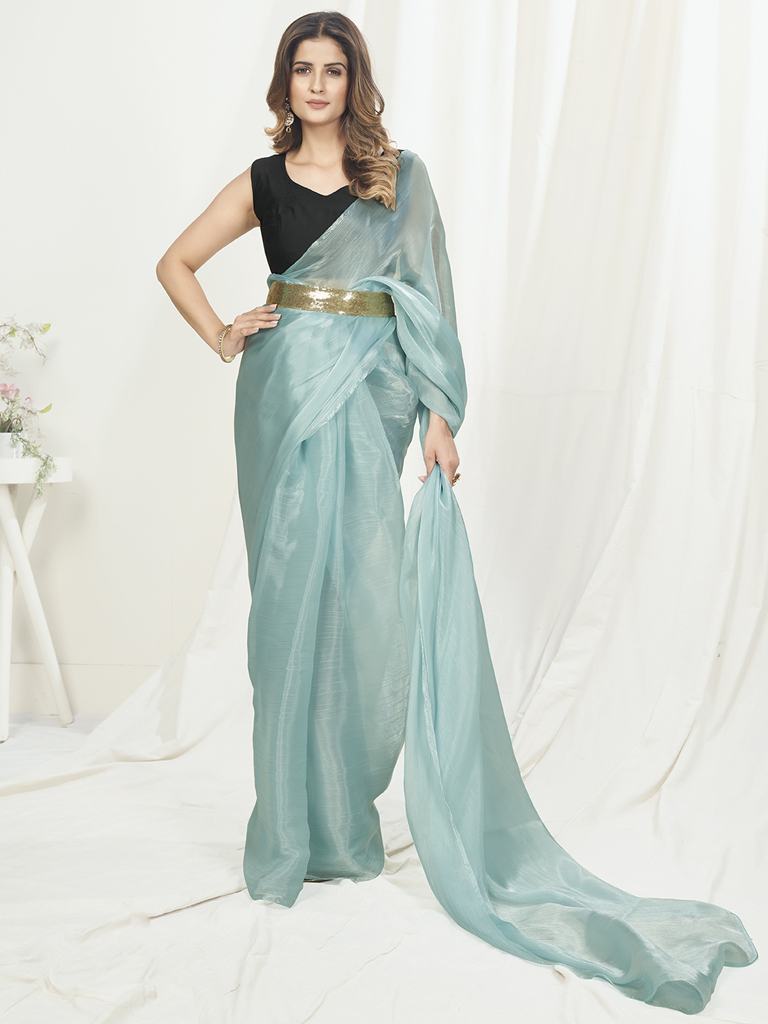
Search interest around floral sarees remains substantial in India, and the category is broad enough to serve weddings, festive lunches, farewell events, parties and destination celebrations. The important part is learning how to choose the scale and fabric for your occasion. A floral saree can be quiet and sophisticated, cheerful and youthful, or glamorous at night. This guide covers print scale, colour, fabric, blouses, jewellery, draping and practical shopping so you can make the trend feel personal rather than temporary.
Why floral sarees are strong again in 2026
The return of florals is part of a wider shift toward expressive textiles. After years of heavy surface embellishment, prints offer a different type of visual interest. They move with the body, photograph clearly in daylight and can make lighter fabrics feel event-ready without adding weight. Florals also fit the current enthusiasm for vintage references: old cinema, archival chiffon styling, garden prints and romantic colour combinations can be translated into a modern saree without becoming costume-like.
There is a practical advantage too. Printed sarees are often easier to rewear than highly occasion-specific embroidery. Change the blouse and the mood changes immediately. A pastel floral saree with pearls can work for a brunch; the same saree with a darker velvet blouse and statement earrings can move into an evening function. That makes floral sarees useful for shoppers who want more combinations from fewer garments.
Start with print scale
Print scale determines the visual energy of a floral saree. Small repeated flowers create texture from a distance and are usually easy to pair with jewellery. Medium flowers are versatile and photograph well without taking over the wearer. Large blooms become the statement and should usually be supported by a cleaner blouse and simpler accessories. There is no universal scale for a particular body type; what matters is whether the total look has a clear focal point.
If the saree contains many colours, choose the blouse from one secondary colour rather than the dominant shade. That creates depth and prevents the outfit from looking like a uniform. If the print is already high contrast, a solid blouse often looks more expensive than another competing pattern. Print-on-print can work, but it needs a deliberate relationship in scale or colour.
Satin florals: polished and fluid
Satin and satin-like surfaces give floral prints a luminous quality. The fabric reflects light, so even a muted grey, blush or beige ground can look dressy. The challenge is to avoid making the outfit too glossy. Pair a satin floral saree with a matte or lightly textured blouse, then choose jewellery with enough definition to stand against the soft surface.

A grey floral saree is especially useful because the neutral ground lets the flowers carry colour. For daytime, use pearl, silver-toned or delicate gold jewellery. For an evening event, add a deeper lip and a structured clutch. The same formula works with blush, navy or black floral satins: allow the print to move while the accessories provide a firm outline.
Floral Banarasi combinations
One of the most interesting directions is the meeting of a floral print with a traditionally rich woven saree. Floral Banarasi-style sarees combine two different design languages: softness in the flowers and ceremony in the zari or woven pallu. That tension can make the saree feel more contemporary than an all-over traditional motif.

With this type of saree, the blouse should bridge print and pallu. A solid blouse in the ground colour is the simplest solution. A gold or antique-gold blouse increases formality. A deep contrast such as wine, navy or green can make the floral sections look richer. Avoid copying every colour from the print into accessories; select one or two and repeat them with restraint.
Soft pink florals for daytime celebrations
Blush and baby-pink floral sarees remain popular because they work with garden venues, daytime weddings, engagement lunches and festive brunches. The modern way to wear pink is to add a little tension. Instead of only pink accessories, try antique gold, emerald accents, pearls, a brown-nude lip or a structured blouse. These details prevent a soft palette from becoming overly sweet.

Blouse trends that suit floral sarees
In 2026, floral sarees look especially fresh with blouses that have strong construction. Square necks, neat sleeveless cuts, elbow sleeves, simple high necks and corset-influenced bodices can all provide contrast to a flowing print. The blouse does not need to be revealing or dramatic; the key is a clean shape. If the floral print is large, keep the blouse simple. If the print is tiny, a blouse with texture, piping or subtle embroidery can add interest.
A useful styling trick is to pull the least obvious colour from the saree. A floral print with pink, green and beige may look expected with pink but more sophisticated with olive or bronze. A grey floral saree can become evening-ready with black. Purple florals can be sharpened by a deep plum or antique-gold blouse. The blouse is where you decide whether the saree feels romantic, traditional or fashion-forward.
Jewellery for floral sarees
Florals already create many small visual points, so jewellery should establish hierarchy. Pearls are excellent for light daytime prints because they echo the softness without introducing another pattern. Gold jhumkas ground florals in Indian tradition. Kundan-inspired jewellery makes a floral saree appropriate for a wedding. Silver or crystal-style jewellery suits cool grey, lilac and blue prints. Statement earrings are often more effective than a heavy necklace because they frame the face without interrupting the print.
Wedding guest styling
For a wedding ceremony, choose a floral saree with a richer border, woven pallu or polished fabric, then make the blouse more formal. Add a bindi and one traditional jewellery family. The objective is to raise the formality without making the saree compete with bridal dressing. For a destination wedding, florals are particularly useful because they photograph naturally outdoors and can feel celebratory without adding heavy garment weight.
For a reception, deepen the palette. Dark florals, purple, grey, wine, navy and black grounds work beautifully in evening lighting. Use a sleeker blouse, defined eye makeup and metallic footwear. An open pallu can create movement in photographs, while a tightly pleated pallu gives a sharper formal line.
Day-event styling
For a mehendi lunch, puja, festive brunch or family gathering, let the floral print do most of the work. Wear comfortable sandals or juttis, smaller earrings and fresh makeup. A low ponytail, soft bun or natural waves keep the look relaxed. If the saree is lightweight, a neat front-pleat structure prevents it from looking too casual in photographs.
Retro floral styling without looking dated
Retro does not require copying a complete vintage look. Pick one reference. You might use a chiffon-like drape, a short-sleeve blouse, a winged liner or flowers in the hair—but not all of them together. Modernise the rest through clean tailoring and current accessories. This selective approach makes nostalgia feel intentional instead of theatrical.
Can floral sarees work for formal events?
Yes. Formality depends on fabric, border, blouse and accessories more than print alone. A floral saree with a woven pallu, structured blouse and refined jewellery can be entirely appropriate for an engagement or reception. For office events, use a smaller print, moderate border and simple blouse. For weddings, choose richer fabric or accessories.
How to mix florals with colour trends
Green, lilac, deep purple, butter yellow, blush pink, navy and earthy neutrals all interact well with florals. Instead of chasing a specific “colour of the year,” look for a floral saree that gives you at least two blouse possibilities. That is the best sign that the saree will survive beyond one trend season. A versatile print can be more useful than a plain saree if its palette connects to colours you already own.
Online buying checklist
- Look at the print in both full-length and close-up images.
- Check whether the floral is printed, woven or embroidered.
- Read the stated fabric rather than judging texture from photography alone.
- Confirm whether the blouse piece is included and whether it is stitched.
- Notice border width and pallu design because they determine formality.
- Compare the print scale to the blouse you plan to wear.
- Check care instructions for satin, silk blends and delicate surfaces.
- Allow time for blouse stitching before a fixed event date.
Common mistakes
The biggest mistake is overmatching every accessory to the flowers. The second is pairing a busy floral saree with an equally busy blouse without a clear reason. The third is choosing jewellery that disappears into the print or is so heavy that the flowers become visual background. Finally, do not forget the hem. Printed sarees often look effortless, but clean length and pleats are what make effortlessness look polished.
How to rewear a floral saree
Restyling is one of the category’s strengths. Pair the same saree with a tonal blouse for one event and a dark contrast blouse for another. Add a waist belt for a structured festive look. Layer a short jacket over a simple blouse for a winter function. Use pearls for daytime and antique gold at night. Even changing the pallu from open to pleated can alter the personality of the saree.
Care and storage
Follow the product-specific care instructions. Printed satin and silk-like surfaces can show pulls, so remove jewellery and pins before storage. Fold without trapping hooks against the saree. Keep the garment in a clean, dry space and avoid high heat unless the care label permits it. If a saree has a rich woven pallu, do not leave the same hard fold under pressure indefinitely.
Frequently asked questions
Are floral sarees suitable for weddings?
Yes. Choose a fabric, border and pallu with enough occasion value, then increase formality through the blouse and jewellery.
Which blouse colour is safest?
A solid blouse in the saree’s ground colour or one secondary floral colour is dependable. Gold and black are useful neutralising options.
Can I wear a floral saree at night?
Absolutely. Darker grounds, satin surfaces, richer blouses and stronger earrings work especially well in evening light.
What jewellery goes with floral prints?
Pearls, gold, antique gold, kundan-inspired pieces, silver and crystal styles can all work. Choose one family rather than several competing motifs.
Do large florals make a saree difficult to style?
No. Large florals simply need more visual space. Pair them with a cleaner blouse and fewer accessories.
Are floral sarees only a summer trend?
No. Palette and fabric determine seasonality. Deep florals and richer fabrics work beautifully for autumn and winter celebrations.
Can I wear a printed blouse with a floral saree?
Yes, but vary the print scale and keep the colour relationship controlled. When in doubt, a solid blouse is more versatile.
How can I make a floral saree look expensive?
Prioritise fit, drape, fabric quality, a strong blouse and edited jewellery. Polish usually comes from proportion rather than adding more decoration.
Final thought
The 2026 floral saree trend works because it is not one look. It can be soft, retro, formal, playful or quietly luxurious. Focus on print scale first, then use the blouse to set the mood and jewellery to create hierarchy. When the floral palette gives you several restyling options, the saree becomes more than a seasonal print—it becomes one of the most flexible pieces in an occasion wardrobe.