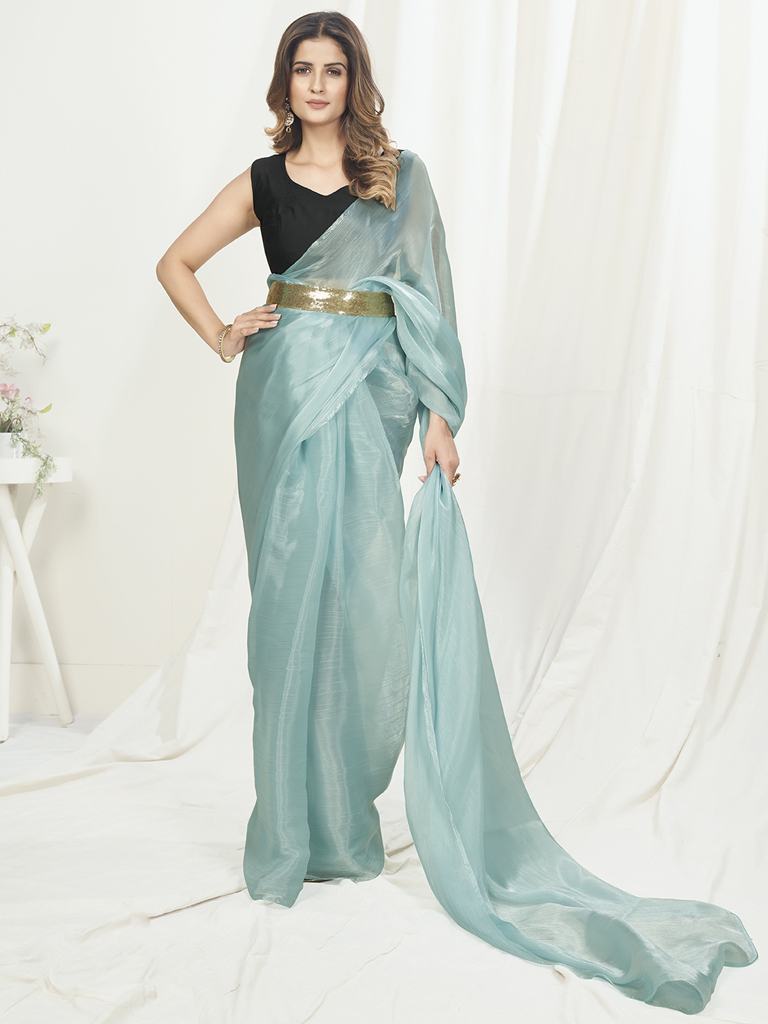
Rewearing does not mean repeating the exact same look. It means separating the saree from the styling formula you used the first time. If you wore a silk saree with a matching blouse, gold necklace, bun and flowers at a wedding, you can wear it again with a contrast blouse, open hair and statement earrings for a reception. The fabric stays the same while the visual story changes. Here are fifteen practical ways to make that happen.

1. Replace the matching blouse with tonal colour
Tonal styling is one of the easiest modern updates. Instead of matching the saree exactly, choose a blouse one or two shades deeper or lighter. Pink with dusty rose, green with olive, blue with navy and purple with plum create depth without strong contrast. This approach works especially well with handloom sarees because it keeps attention on the weave.
2. Use a dark contrast blouse
Black, wine, navy and deep green can completely change a lighter saree. A lilac silk becomes more evening-oriented with black. Pink becomes richer with wine. Cream becomes sharper with black or emerald. A dark blouse also gives jewellery a strong background, so you can use smaller pieces and still make an impact.
3. Add an ivory or gold blouse
When a saree contains zari, a neutral metallic or ivory blouse can connect to the border while making the overall palette calmer. This is particularly useful for a colourful saree you want to wear to a different family function without repeating the first event’s exact combination. Keep the blouse texture refined; it does not need dense embroidery if the saree already carries detail.
4. Change the sleeve language
Sleeves strongly influence the decade and mood of a saree. Elbow sleeves can feel classic and polished. A clean sleeveless blouse feels contemporary. Full sleeves create evening drama. Short structured sleeves can reference retro styling. Before stitching a new blouse, consider whether you already own a well-fitting one in a compatible colour. Rewear is most sustainable when it uses the wardrobe you have.
5. Try a square or sculpted neckline
A modern neckline can refresh a traditional saree without changing anything else. Square necks create strong geometry against a soft drape. A sculpted sweetheart shape feels feminine but controlled. A high boat neck makes the saree more formal. The important thing is fit: a trendy neckline that gaps or shifts will make the whole look feel less polished.
6. Swap heavy necklaces for statement earrings
If your first look used a complete necklace set, remove it the second time. Wear one pair of large earrings and let the neckline breathe. This simple change can make a wedding saree appropriate for a dinner, festive party or engagement. It also directs attention toward your face rather than the centre of the blouse.
7. Change the jewellery metal
A saree worn with traditional gold can feel completely different with pearls, silver-toned pieces or crystal-style jewellery, provided the border and blouse support the change. Cool lilac, grey, black and blue sarees are particularly adaptable. Warm reds, greens and creams can often move between antique gold and pearls. Keep bag hardware in the same family for cohesion.
8. Use a belt carefully
A slim belt can define the waist and control an open pallu. Choose a belt that relates to the saree rather than dominating it. Metallic belts work with zari; fabric-covered belts can be more subtle. Avoid very bulky belts when the saree already has a broad border because too many horizontal elements can make the waist area visually crowded.
9. Add a short jacket
For winter weddings, a cropped jacket can turn a familiar saree into a layered outfit. Velvet, brocade or a clean tailored fabric works depending on the textile. Keep jacket length high enough that the saree waist remains visible. If the jacket is richly patterned, simplify the blouse and jewellery underneath.
10. Try a longer cape or overlay
A sheer cape, structured long jacket or open overlay can make a saree feel almost Indo-western. This works well for receptions and evening events. The overlay should not fight the pallu. Either keep the pallu pleated and controlled or design the layer around an open pallu intentionally.
11. Change the pallu from pleated to open
Drape alone can transform photographs. A pleated pallu gives a crisp, traditional line and showcases borders. An open pallu creates softness and movement. If you wore the saree pleated at a ceremony, open it for a reception. If you wore it open at a wedding, pleat it for a more formal office or festive event.
12. Experiment with regional drape inspiration
Seedha pallu, belted drapes and other regional or contemporary arrangements can change the saree’s architecture. Approach culturally specific drapes respectfully and learn the technique properly rather than using it only as a costume reference. Even a subtle change in pleat placement or pallu direction can make a familiar saree feel new.
13. Change the hairstyle completely
A bun with flowers communicates tradition. Sleek straight hair feels editorial. Soft waves create reception glamour. A braid adds a different cultural texture. Hair occupies a large visual area around the blouse, so changing it can be more transformative than buying a new accessory. Use the saree neckline and earrings to choose the best style.
14. Change the footwear and bag
A potli and juttis make the saree feel festive and traditional. A structured clutch and slim heel make it sharper. Flat sandals can relax a silk saree for a family lunch. These smaller accessories also change posture and movement, which affects how the entire drape appears.
15. Change the occasion role
Do not categorise a saree permanently by the first event where you wore it. A wedding saree can become a Diwali saree with lighter jewellery. A festive saree can become an engagement look with a richer blouse. A handloom saree can become formal workwear with a simple blouse and restrained jewellery. The textile does not know what occasion it belongs to; styling creates that meaning.
Rewearing a Katan saree
A pink Katan-style saree can move through several palettes. First wear: antique-gold blouse and traditional jewellery for a wedding. Second wear: wine blouse, open hair and earrings for a reception. Third wear: ivory blouse, pearls and a neat bun for a daytime puja. Fourth wear: black sleeveless blouse and a clutch for a festive dinner. The more neutral the border, the more combinations become possible.
Rewearing Kanjivaram
Kanjivaram sarees often have strong contrast borders, so use that border as your restyling map. A lilac saree might support gold, plum, black or a related contrast from the pallu. Change the blouse fabric from silk to velvet or a matte textile for a different season. Reduce jewellery the second time and let the colour architecture become the statement.

Rewearing white and cream sarees
Neutral sarees are especially versatile. Pair white with red for one traditional look, emerald for another, gold for ceremony and black for evening. Pearls make the saree soft; antique gold makes it warm; colourful stones create festive contrast. Neutral sarees also work well with heirloom blouses because they provide a quiet base.
How to repeat a saree at the same social circle
The fear of being seen in the same outfit is often much larger in our minds than in reality. People usually remember overall styling, not the precise garment history. Change the blouse, hair and jewellery and the photographs will already look different. More importantly, repeating a beautiful garment signals confidence. A saree that deserves to exist for decades should not be treated as disposable after one Instagram post.
Create a blouse library
A small set of excellent blouses can unlock a large saree wardrobe. Consider black, antique gold, ivory, deep green or wine, plus one contemporary neutral. Focus on fit and quality rather than buying many. If each blouse works with three or four sarees, you create combinations without new full outfits.
Create a jewellery library
The same logic applies to jewellery. One warm-gold earring, one pearl option, one more traditional necklace and one modern statement piece cover many sarees. Add bangles and bindis selectively. This approach saves money and gives your personal style continuity across events.
Care before rewear
Inspect the saree several days before the event. Look for loose threads, stains, damaged fall, weakened hooks on the blouse or hard creases. Follow the proper care instructions rather than trying last-minute home treatments. Refold and air as appropriate. Try the complete look with footwear in advance so the saree does not feel “old” simply because it was prepared in a rush.
Buying new with future rewear in mind
- Choose a saree with at least three possible blouse colours.
- Prefer borders you can style both traditionally and minimally.
- Think about day and night jewellery combinations.
- Read fabric and care information.
- Avoid choosing only because it matches one event theme.
- Consider whether the blouse piece itself can be reused.
- Choose colours that complement accessories you already own.
- Plan storage before buying very delicate textiles.
Frequently asked questions
Is repeating a saree fashionable in 2026?
Yes. Rewear, heritage textiles and more thoughtful wardrobes are increasingly visible parts of current fashion conversation.
What changes a saree look most?
The blouse, hairstyle and jewellery scale usually create the biggest visual difference.
Can I wear a wedding saree to a smaller function?
Yes. Reduce jewellery, use a simpler blouse and choose a cleaner drape.
Can I modernise an heirloom saree?
Yes, preferably without permanently altering valuable fabric. Use blouse, accessories and drape to update the look.
Should I add a belt?
Only if it improves proportion and pallu control. Belts are an option, not a requirement.
Can one blouse work with many sarees?
Absolutely. Neutral and metallic blouses are among the most useful wardrobe investments.
How do I make repeat photos look different?
Change the pallu, hair, blouse neckline, jewellery and setting. The same saree can photograph very differently.
What is the most sustainable styling choice?
Use what you already own, care for it well and buy new pieces that multiply existing combinations.
Final thought
A heritage saree becomes more valuable each time you discover a new way to wear it. Rewear is not a compromise; it is proof that the garment has design depth. In 2026, the most modern saree wardrobe may be the one that looks backward and forward at once—respecting textile history while using current blouses, jewellery and drapes to create a new version of the wearer every time.